In this episode I’m chatting with Sarah Knight, who is a holistic nutritionist and founder of Eat Like a CEO.
She helps entrepreneurial and professional women get out of the tired-wired cycle and have natural energy without relying on caffeine or sugar.
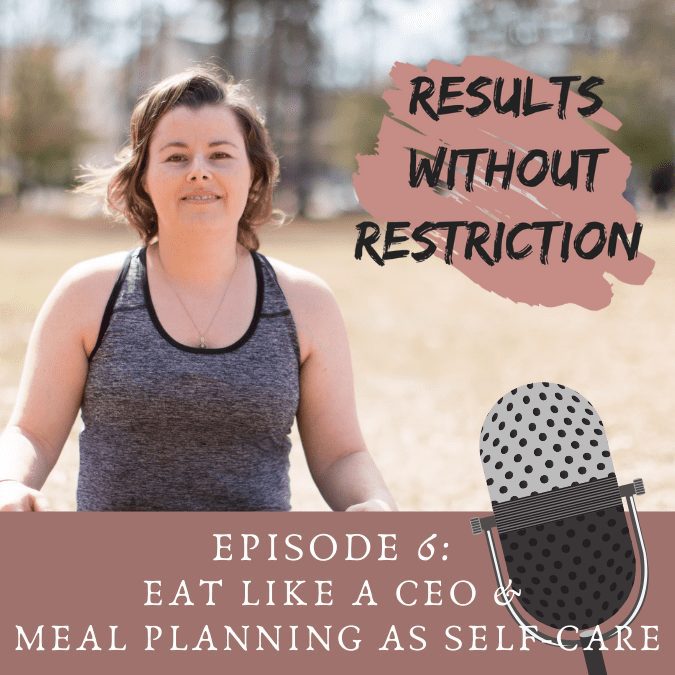
Listen to the Episode
Subscribe: Apple Podcasts | RSS
We specifically talk about how meal planning is a form of self-care as we’re taking intentional action to reduce the stress for future us!
What’s ahead…
About Sarah
Sarah Knight is a holistic nutritionist and founder of Eat Like a CEO. She helps entrepreneurial and professional women get out of the tired-wired cycle and have natural energy.
She’s passionate about helping women systematize their nutrition to reduce decision fatigue and get the nutrients they need to have the energy, focus and confidence to make power moves in their businesses, careers and lives.
Episode Transcript
You know, getting off of diets and learning how to take care of yourself in a way that works for you and makes you feel good because ultimately it’s all about how you feel, right? Because your body is here to allow you to experience the world and I think that we flip that a lot and see our bodies as a way for other people to experience us and that’s not, that’s not what it’s for and it took me a long time to learn that.
Welcome everyone. I am here with Sarah Knight. She is a holistic nutritionist and she is the owner of EatLikeACEO.com and she helps women who own their own business or even if you are just entrepreneurially minded or driven to eat healthy and eat in a way that promotes lots of energy, better sleep and just better living in general.
Welcome, Sarah.
Sarah Knight: Thank you so much for having me. I am really excited. This isn’t about me, but I’m really excited because I, you know, as you know, I’m a business owner and I need help eating like a CEO because right now I eat like a five-year-old.Okay, so I need, I definitely need help in this department. What I like to do is I like to just start at the beginning like your origin story. So what brought you to this point? How you, your, your background, how you became a holistic nutritionist and got you to this point?
Sarah Knight: Yeah, so when I was in about second grade, I had this experience that I remember so vividly…
Oh, we’re going way back. We’re going way back. Oh, okay. All right.
Sarah Knight: my best friend at the time, you know, the boys thought it was hilarious because when she was sitting in a chair at a desk they could push it in to the point where the chair was almost touching the desk with her sitting in it and that is the point where I became very conscious of my body. And from that point on, I was really focused on losing weight.
So from the time I was about 12 years old, so that was like the beginning. And then when I hit about 12, you know, I was starting to look for different diets. I joined Weight Watchers before I could drive.
Sarah Knight: I remember putting myself on the special K diet where you eat half a cup of cereal for two meals a day. And this is when I was in high school. I was playing volleyball. I was a very active teenager and I felt miserable. Like I would get home from school or from practice and I would go straight to sleep until dinner because I was exhausted and I didn’t want to be awake to feel how hungry I was. And so after living that life for my entire teens and early 20s, when I was in college, I realized like this isn’t working for me.
So I need a better way. I need to learn how to just take care of my body so that I can feel good, so that I can have the energy to get through, you know, college and school and work and be able to focus when I’m studying and actually remember things. So I started working with the nutritionist at the School Wellness Center.
I was really lucky to have that access. And that’s what kind of sparked for me, this idea that being healthy and feeling good. It doesn’t have to be all about restriction and it doesn’t have to be hard and miserable, which is what I had been led to believe up until that point.
So all of us. Yes, we all we all got fed that that nonsense.
Sarah Knight: So that is what got me to being really interested in nutrition and how to eat to just feel good and take care of myself. And then from college, I started a corporate career. I realized that was not the place for me. And so I went back to school and studied holistic nutrition, earned my holistic nutrition certification from Bowman College. And now here I am.
OK, so this gets you to the point where you are a holistic nutritionist, but you specifically work with entrepreneurs or people. You could be working literally with any demographic, but you are focused on helping CEOs and those who are professionally driven. Why is that?
Sarah Knight: Because I believe that in order to make big moves, to go for big goals like that, to run a business, to be ambitious in your career and strive for more impact and influence, you need to have energy and focus and productivity. All of that requires physical and mental stamina to be successful. And so I’m really passionate about helping women learn how to eat, to have that stamina, to feel good, to support their mental health so that what they eat is not taking up all of their mental energy anymore.
They have systems in place to know what they’re going to have. They don’t have to think about it. It eliminates a lot of the decision fatigue that women experience in daily life.
And that all adds up. So if I can take that burden away, help them systematize their nutrition so that they’re eating well, they know they’re getting the nutrients they need and they’re feeling good. And then they have all of this energy to put toward building their business or being promoted in their career or running for office or writing a book or raising a family, whatever that is, that can become their primary focus instead of just being worried about what they’re going to have for dinner.
OK, I know we we talked a little before the call, but I am your ideal client. Like I need help with all of this because I have the decision fatigue like the whole like creating a meal plan and making a shopping list and prepping and all of this stuff. Like if you leave this up to me, I will eat sandwiches and cereal because I just don’t have the bandwidth.
I run my own business and it’s exhausting. And by the by the end of the day or by the time I have time to think about what I’m going to eat, I don’t have the energy to make decisions. And it drives my husband insane.
But like you said, like that decision fatigue or the mental fatigue of making those decisions, I just I relate with that because that is where I am by the end of the day or by the end of the week. I can’t I don’t have the wherewithal to do to do any of that. So what I wanted to kind of talk to you, you know, here at results without restriction, we’re all about self-care.
And meal prep is a is a form of self-care rate because we’re managing our time to kind of help future us. You know, we’re alleviating some of the pain and aggravation of of doing all this work for future us.
So can we talk a little bit about how you help your clients give themselves the space or permission that some of them might need to indulge in this self-care and meal prep as self-care?
Sarah Knight: One thing I talk with my clients about a lot is don’t make it harder than it has to be and don’t strive for perfection.
Like I used to have this mindset. It doesn’t have to be all or nothing, which is something that, you know, we learn from diet culture where you’re eating that’s not sustainable.
So you revert to maybe like for me in college, sometimes it was Pop-Tarts and tortilla chips. And so it’s just this pendulum. And I think that that all or nothing mindset stays with us even when we let the diets go. And so just learning, like, you know, if buying pre-chopped vegetables is the thing that makes this feel easier for you.
And it means that you’re more likely to prep some food for yourself than if you bought a head of broccoli that you have to wash and chop yourself. Then do that. Like buy the frozen vegetables, if that’s what’s going to work for you. Find like that sweet spot where you’re taking care of yourself, but you’re not making it so hard that it feels like a burden.
So path of least resistance.
Sarah Knight: Yes.
And in terms of like just being able to put together meals so that, you know, when we get hangry or, you know, we are and I’m guilty of this. I’ll be working and I don’t even notice the clock. Like hours go by and I’m like, oh, I forgot to eat lunch. Like I was so engrossed in what I was doing. And then and then it hits me and I’m starving and there’s nothing ready.
Sarah Knight: Yeah.
And I’m like, I want to go back in time and punch myself in the face for not setting myself up for some kind of success here. But it’s almost like, you know, if we could do that thing for ourselves, that self care of putting together planning for future you to have something healthy to eat, to help keep your energy up.
Sarah Knight: Yes, exactly.
Do you talk a lot with your, with your clients about self care, just kind of in general and not just in meal prep, in the, in the area of meal prep, but just in general of how they treat themselves?
Sarah Knight: Yeah. We talk a lot about like the internal dialogue that’s playing and stress management, because when you have chronic stress, that is a huge impact on your health and also how you take care of yourself.
Because for a lot of my clients, like, you know, they have big businesses or demanding careers and there’s a lot of stress that builds up.
And then that sparks cravings and, you know, this desire for food that they know is not going to serve them. They’re not going to feel good after they eat it, but they still want it. So we talk about, you know, sustainable stress management, where you’re managing your stress every day so that when it does peak, you already have those practices in place.
And so what could have been a 10, had you not been keeping a baseline stress management plan, now maybe it’s a seven or an eight instead of being that 10 and that’s more manageable.
I love the idea but I’m not great about doing it myself. We’re talking about sustainable stress management, right? having practices in place and do you help your clients with those things specifically or do you kind of help guide them to what works for them individually?
Sarah Knight: Yeah, everything is individual. I’m a huge believer that there is no one size fits all plan, whether it’s your nutrition program or stress management plan and everything in between. You have to find what works for you, but I’m all about practicality. So I know that sometimes it’s not practical to sit down for half an hour and meditate in the morning.
But can you do one minute of deep breathing while you’re still in the bathroom after you brushed your teeth before your kids jump all over you, right? So finding something that’s a good starting point that’s going to get you headed in the right direction.
And I’m sure other people struggle with this because I struggle with this is I want to be like I want to be doing the half hour of meditation and the hour of exercise and the half hour of journaling. And then by the time my morning stress management is done, it’s dinnertime.
Right, right, right. We can’t have the stress management techniques that take us all day because then we don’t even have time to get stressed.
Sarah Knight: So I think it’s really helpful when you’re working one on one with someone who can just catch that thought pattern for you and say, hey, you’re going for perfection. Just do something that’s manageable because that’s going to make a huge difference. And when you can carry that habit long term, that consistency is always better than perfection. And this is something I think I post that on Instagram like every other week, just a reminder like we need.
We need that reminder because we go through these things where I don’t know, maybe. OK, maybe it’s just me or you do great for a while. I’m like, great. I ‘m doing my morning meditation. It’s going great. I’m on like I’m on like this roll and then something will come up. I miss one day. Forget it. I’m off the rails. And then I’m like, oh, man, it’s been a week since I did that. I feel it. And I’m just I know I need to get back to it.
So it’s just that creating the habit and then, you know, kind of doing what’s manageable to get back into it. Now, when when you talk to your clients about like stress management, self-care and things like that, do you get any pushback because we’ve got a lot of women who are driven, maybe they’re like kind of in denial a little bit that they need to do these things because it seems like too much of a luxury that they don’t have time for.
Sarah Knight: Mm hmm. Yes. I definitely have had clients who it takes a few weeks of me nudging them for them to finally say, OK, fine, I’ll do the minute of breathing. Dang it.
And then I think that’s what’s powerful about working with someone.
Right. Is you know that you will benefit from implementing these exercises, but it is hard to make that time.So when you have someone checking in saying, hey, you know, it’s time for you to show up for yourself, take care of yourself like you know, you deserve to be taken care of. And it doesn’t have to be as hard as you think it will. Like, just try it.I think that that is really powerful. And then, you know, after me lovingly nagging them, they’ll start doing it. And then by the end of the program, it’s like second nature for them.
And it’s just it’s part of their routine. And it’s a thing that they identify as a person who does that. So they resisted a little bit, but then, you know, you wear them down.
Yes. Just kidding. But you do help them like experience the value because it’s not just you telling them and they’re them saying, OK, sure if you say so.
But they actually do see the benefits and they experience like the difference between, you know, an incident that sets them off at a 10 when they could be at like a five or six and it’s manageable, like they’re experiencing that like, OK, I see. I see what Sarah’s saying now. Yeah, I’m on the bus.
All right. So let’s talk a little bit about your program specifically. I’m excited since, you know, clearly I need this. So let’s talk about kind of like the framework and what it looks like to work with you.
Sarah Knight: Yeah, so I mostly work one on one with clients, which is really awesome, because like I said, there’s no one size fits all approach.
So I’m able to fully customize a nutrition program, stress management plan, supplement protocol, all of those things for the individuals, you know, their health conditions at the time, what they might be predisposed for based on family health conditions, their goals. So it’s a very comprehensive plan. And it also can be customized for their lifestyle.
Sarah Knight: Like I’ve had clients who are like, I’m not going to cook anything that takes longer than five minutes.
And that’s just who I am as a person. That’s me. I said that… that was me.
Sarah Knight: Yes. And you’re not the only one who said that this is a common thing because, right, we’re busy. And so I think that is why I also love working with entrepreneurial and professional women, because I’ve been there.
I’m an entrepreneur myself. I’ve worked a corporate career where, you know, you’re showing up at the office at six, 30 or seven and leaving at seven. And you’ve been there for 12 hours. So I get the demands. Yeah, so I work one on one. And we it’s just it’s amazing to see the results that clients get.
Like I’ve had clients who when they came to me, they were waking up multiple times throughout the night. And by the end of the program, they’re sleeping through the night and, you know, feeling so much more rested. I’ve had clients who their rosacea resolved through, you know, just making simple changes to their nutrition. And of course, the energy and focus.
Sarah Knight: So is that did I answer your question?
You did. So so basically, it’s it’s not just, you know, here’s a meal plan. You follow it.
Sarah Knight: We’re going to talk about all kinds of like your lifestyle, your schedule, your preferences, you know, what you want, how you want to feel by the end of this program. And we’re going to work towards that. We’re going to look at your individual goals. So it’s not a cookie cutter. You sign up. You get, you know, this pre-printed here’s what you’re going to follow. And, you know, good luck.
But and you’re also doing check ins and you’re also, you know, having this constant contact like as a resource, as a an encourager, support a coach’s habits are they’re ingrained.
And it’s really hard to change is hard. That’s what I should say. Change is hard. And so having somebody to kind of help you, you know, move from from point A to point B and then get to the point where you can kind of maintain that.
So it’s not just a temporary like here, we’re going to do this for 12 weeks and then you can go back to living your life. Now, these are changes that we’re working on implementing, you know, lifestyle changes. And I hate to. It’s such a cliche term, like make it a lifestyle.
Right.
But it’s true. It needs to be something that you adapt as part of who you identify. Like like you said, they identify as somebody who does these things, somebody who is who does meditate, somebody who does yoga. Like that becomes part of who they are.
OK, so one thing I think people kind of get tripped up.
So you are a holistic nutritionist and you kind of went over this a little bit. But what would you say is the biggest difference between, you know, working with you in your program versus hiring a dietician or a personal trainer?
Sarah Knight: Dieticians and trainers, they all have their own unique approaches. But I think what’s really exciting about working with a nutritionist like myself is that you get the one on one support. So, for example, some dietitian programs and they’re not all like this.
They all have their unique things. But it could be, you know, you meet, you get your assignment and then you go home and implement. And then you come back like two weeks later, a month later and check in. Whereas I am constantly like, you know, I use Voxer with my clients and they have unlimited access. So there’s no downtime.
There’s no like if you hit an obstacle or a hurdle, you’re not waiting for our next session to get answers, to get support or encouragement. You know, they’re boxing me and then we’re working through it in the moment so that they’re staying on track and they’re having that accountability.
And it’s also like we talked about a more holistic approach to health. So while it is a nutrition program, it’s so much more than that.
Sarah Knight: And I imagine, too, like you said, a dietitian is really like food-based. They’re not really looking at lifestyle and like stress management, things like that and a trainer. So I’m a certified personal trainer. So I know for me, when I worked with clients, I could talk to them about exercise, but I couldn’t talk to them about what they were eating or and that’s really what they wanted to talk to me about, because let’s be honest.
We all know that a lot of how we feel comes from what we’re eating and how we’re how we’re eating and how we’re treating our bodies and the stress management and just time management and taking care of ourselves.
And so as a trainer, you know, I would say, you know what? You probably need more than I can give you. So you might want to look into and I would refer out. I would have a list of, you know, here’s who you know, if this is what your your real goal is, if you’re struggling with this and this. Exercise is great for a lot of things, but I cannot help you with this.
So I love that you take more of a holistic approach for looking at at the client as a whole. And it’s not just here’s here’s a food list or here’s exercises, but it’s it’s kind of the whole package.
So we’re talking about your program and clients who go through it. And so as a program kind of comes to an end. When when you’re kind of recapping the experience with your clients, what are they saying that they got? Like, what was their biggest aha moment? What is the biggest transformation for them as they reach that that three month mark?
Sarah Knight: Hmm, there are so many. I actually just wrapped up with one three month client and she was saying that her biggest takeaway is that she has hope again, which just like made my heart so happy. Oh, my gosh. She felt like she had hope again, that living a healthy lifestyle is something that’s actually possible for her.
She had lost hope prior to that, that, you know, that it was something she would be able to do. And I think that is, again, something that diet culture really screws us over with is diets are not sustainable. And so we internalize that and we make it mean something about ourselves and our ability to be healthy and take care of ourselves
.And when you just realize like there’s a different way and I can feel good, I can have energy. I don’t have to be lethargic all of the time. And this is possible for me.Like, that’s so powerful. So I could have cried when she said that, you know, she had hope again that this is something that she can do. Just to kind of expand on the thing that you just said about diet culture and how we internalize our failure, you know, and I’m using that in air quotes, our failure to be healthy, right?
Because a lot of diet culture messaging is, you know, wait. If you if you are in a larger body, you’re unhealthy. If you cannot maintain a smaller body, you’re not trying hard enough. You don’t want it enough. There’s something wrong with you. That you can’t eat healthier, but breaking free of that, that mindset and just understanding that healthy looks different for everyone. And what looks healthy for you is not going to look healthy for me.It’s just going to be different. And that’s fine. Like you said, she had hope again that she could be healthy in the way that is meaningful for her.And that’s that’s amazing.
OK, Sarah, we’re going to start to wrap up, but Sarah, what I like to do at the end of every episode is ask my guests to provide their top three tips for whatever their area of expertise is. So what would be your top three tips for our listeners who are looking to start adding some self care into their daily life?
Sarah Knight: The first one would be to start implementing some kind of stress management plan and don’t make it too hard.
Like I said, if your starting point is one minute of deep breathing after you brush your teeth before you leave the bathroom in the morning, then start there. So that would be tip number one is finding something that works for you and start doing it. Tip number two would be when you’re eating to focus on how you want to feel because that really gets us tuned back into our bodies and how food makes us feel and starts to reignite that connection.
So think about how you want to feel and then use that to inform your decision of what you’re going to eat. And tip number three would be eat more leafy greens. Everyone needs more leafy greens.
Sarah, this was wonderful. Thank you so much. And I’m going to go ahead and put all your details in the show notes.But you can find more details on Sarah and her program at her website, which is each like a CEO dot com. And I’ll also be putting a link in the show notes for your your freebie, which is the cheat sheet on how to make a smoothie. So how to actually not just any old smoothie or like a power smoothing that’s going to fill you up and make you feel like you can run.You can run the world. Exactly.
Well, thank you, Sarah. This has been amazing.
Sarah Knight: Thank you so much for having me.
Frequently Asked Questions
Here is the updated FAQ with no dividers and no em dashes, keeping it clean, readable, and SEO friendly.
FAQ: Eat Like a CEO with Sarah Knight
Who is Sarah Knight?
Sarah Knight is a holistic nutritionist and the founder of Eat Like a CEO. She helps entrepreneurial and professional women break out of the tired wired cycle and build natural, sustainable energy without relying on caffeine or sugar.
RELATED: From Foggy to FOCUSED with Sleep Coach Christine Meyer
What does “Eat Like a CEO” mean?
It means eating in a way that supports focus, stamina, mental clarity, and productivity. Sarah teaches women to simplify nutrition, reduce decision fatigue, and create systems that make healthy eating easy and realistic.
Why is nutrition important for entrepreneurs and high achieving women?
Entrepreneurs and ambitious women carry heavy mental loads, long hours, and constant decision making. Poor nutrition and chronic stress drain focus, energy, and productivity. Sarah focuses on helping women create consistent energy so they can pursue big professional and personal goals.
How is Sarah’s approach different from traditional dieting?
Sarah does not use restrictive diets. Her approach is personalized, flexible, and designed to help women feel good. There is no calorie counting or perfectionism. Instead, she helps clients reconnect to what their bodies need to feel energized and nourished.
Does Sarah help with more than just food?
Yes. Her coaching includes stress management tools, lifestyle support, sleep strategies, supplement recommendations, and practical routines. She looks at the whole person and not only the food they eat.
What makes Sarah’s one to one program unique?
Her programs are fully customized and she offers ongoing support between sessions. Clients can reach her through Voxer for real time help whenever obstacles come up. This support helps clients stay consistent and build long lasting habits.
Who is the Eat Like a CEO program for?
The program is ideal for entrepreneurs, small business owners, corporate professionals, and women with demanding schedules who want more energy, better focus, and easier meal routines.
What results do clients usually experience?
Clients often report better sleep, more stable energy, fewer cravings, easier decision making around food, improved skin, and better digestion. Many say they feel hopeful again about being able to live a healthy lifestyle.
How does Sarah incorporate self care into nutrition?
She reframes meal planning and simple habits as acts of self care for your future self. Her goal is to make healthy routines easier, not harder. Even small steps like buying pre chopped vegetables or doing one minute of deep breathing can create big improvements over time.
What are Sarah’s top three self care tips?
- Start a simple and sustainable stress management habit such as one minute of deep breathing.
- Choose meals based on how you want to feel.
- Eat more leafy greens.
Where can I learn more?
Visit EatLikeACEO.com for details on Sarah’s work and to download her free smoothie building cheat sheet
Subscribe: Apple Podcasts | RSS