Subscribe: Apple Podcasts | RSS
How Meditation and Mindfulness can be life-changing habits
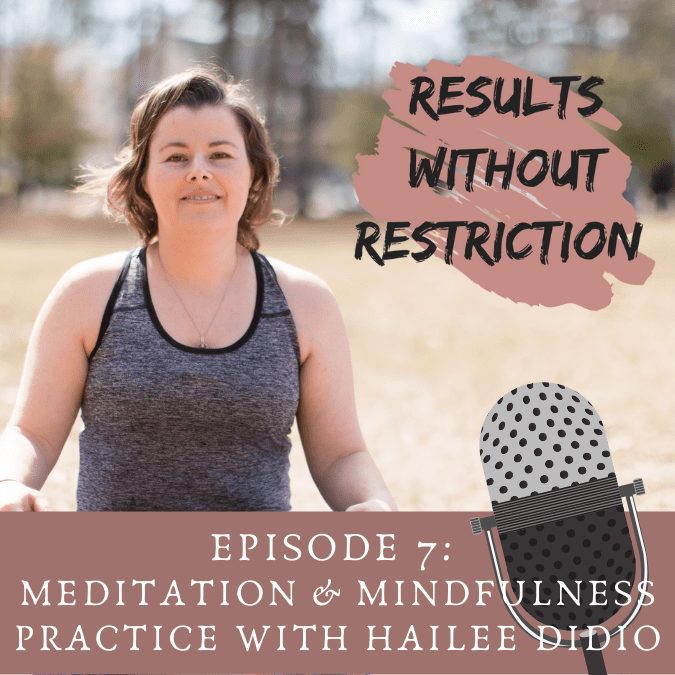
In this episode I’m chatting with Hailee Didio, who is a certified health coach and meditation teacher.
After personally experiencing a ‘lifestyle 180’ by implementing her own meditation and mindfulness practice, Hailee decided to become a certified coach to help teach the strategies that helped her turn her own life around.
Hailee teaches meditation classes, coaches in both group and 1-on-1, and runs a monthly membership program that offers fitness classes, yoga classes, meditation sessions, and more!
We talk about the sneaky symptoms of stress, how meditation can help get it (and keep it!) under control, the challenges of starting a meditation practice, and how you can avoid the frustration that so many meditation that a lot of newbies experience!
Hailee is also the host of her own podcast, Live Your Wellness.
Show Mentions
- The Relaxation Response, Herbert Benson (Affiliate Amazon Link) – The book my doctor recommended about meditation, how it works, how it helps
Episode Transcript
00:32 Hey everyone. I am here with Hailee Didio, who is a holistic health coach and meditation teacher who came into this line of work after she found herself in her late twenties and in a place where her self-care was practically non-existent.
00:46 She says she was living a life filled with alcohol, fast food, and negativity, and started to realize that this was not only not serving her, but impacting those around her as well.
00:57 She began meditating and practicing some mindful nutrition and movement daily, and started to see some gradual but dramatic improvements, but it was a challenging path, and Haley was drawn to health coaching to help others get the same type of results.
01:11 Haley, welcome to the show. Thank you for being with us today. Thank you so much for having me, Lori. I’m excited.
01:17 We’re gonna dive right in. So, I always like to start with kind of what brings my guests to the point where they are, because generally it’s, it’s almost like their own journey or their own path helps to kind of shape where they, where they go with their own business and with their own coaching services.
01:39 And, you know, if you listen to this show, you know, I have people in all different areas, so, you know, it’s nice to talk to like personal trainers who’ve been at, you know, who’ve trained for athletic events and then they decide they wanna help other people do the same thing.
01:52 So I find like a lot of my guests have a journey that shapes how they wanna help their clients. And I know I did a, I did a little snippet there where I talked a little bit about that, but I’m sure there’s, there’s more there for you to unpack and we would love to hear all about it.
02:06 Yeah, well, you said it. It is definitely my personal journey that has led me to do to where I’m at in my business now.
02:16 You know, I’ve always been interested in health and wellness and I really thought that I wanted to do coaching on you know, nutrition and, you know, even like weight loss and these kinds of things.
02:32 And I’ve really moved away from that and gotten to a place where I am really dealing a lot more with mental health and stress management.
02:42 And as you said, it’s because, you know, in my life I’ve been I’ve been in a place where I really wasn’t practicing a lot of self-care.
02:54 I was, you know, I’ve definitely been through some depression and some anxiety, you know, as everybody I’ve, you know, been through some things in my life and you know, experienced, you know, death of a very close family member.
03:11 And so all of these things led to me really not taking care of myself and letting my stress just build and build and build.
03:19 And so it took me a while to realize that that is really what I wanted to focus on in my business because once I started working on that in my personal life, building up my meditation practice and really focusing on self-care I just noticed a huge improvement in my ability to show up as my best self have more energy and be motivated to to do the things that I wanna do in life.
03:50 So that’s kind of where I got to this point of focusing on stress management in my health coaching practice. And it’s interesting that you said that because, so when you manage your stress, it’s not just that one thing, right?
04:05 It, it kind of leaks over into, it spills over, I should say, into other areas. So like being, having energy, being motivated you know, wanting to, kind of wanting to take care of yourself more.
04:19 So, you know, here on the, on the R W R podcast, we’re all about self-care in all these different forms.
04:26 So gentle nutrition and movement and, you know, a big part of self-care is stress management because it is so impactful in all these different areas.
04:35 So stress, if left unmanaged, can really manifest in some sneaky, like, in some sneaky ways, physical, emotional symptoms and that we don’t even know that stress is kind of is coming up behind it.
04:47 And that, that year that we just had Right. That was stressful. Absolutely. Right. So what are some of the ways that you are finding, like with clients that are coming to you that stress is manifesting for them?
04:59 Yeah, it’s so many ways that stress manifests, as you just said. There’s physical symptoms, there’s emotional symptoms. I think that a lot of people are experiencing very low energy and feelings of being overwhelmed.
05:16 They’re not sleeping well. And so I think that these are some of the biggest ways that stress is showing up in people’s lives.
05:24 And then of course, there’s all the physical, you know, things, things that can happen. Stress is really terrible for your brain, for your memory.
05:33 And when I say stress, I, I think your listeners probably already know, but there’s, you know, there is good stress, but we’re talking about when that stress gets to be too much and this is the bad kind of stress that actually has a negative impact on our health, both physical and emotional.
05:49 I know you didn’t ask me, but I’ll, I’ll share like for me, this past year with, with covid, stress showed up as you know, insomnia, chronic pain, like joint pain, muscle pain.
06:04 And one thing that I noticed that when I was super stressed, it almost was exponentially more difficult to choose to manage it.
06:15 Yes. Like it made it harder to take time to do things for myself. Is that something that you, you find when you get clients and they’re like, they’re at that point where they’re like, you, you’re telling them to take a break or, you know, take five and, and do these things for themselves and they almost like can’t because they earn that hyper stressed state.
06:37 Absolutely. Yeah. I think when you get to a certain level of being overly stressed and it kind of starts to show up as overwhelmed, it can be really hard to take that first step.
06:48 And every single form of stress management can seem like you have to climb this huge mountain to get there. And I think that’s, you know, that’s really where coaching comes into play, right?
06:58 It, it’s so helpful to have somebody take you through that process and identify what is something very small, like where are you at right now?
07:07 And what is a, a very small baby step that feels manageable to you that you can start to take when you’re in that, that place of overwhelm that you can then build on upon that momentum.
07:19 So I think that’s absolutely common. I think so many people go through that. And so it’s just about, you know, finding that that first step that you can take that small step that you can take to, to start moving yourself.
07:34 Out of that space, What is a good first step? So if I’m, if I’m hyper stress, I’m waking up and I’m got the anxiety, like the, that, okay, I, I need to do this, I need to do that, I have to get to work, I have to do all these things.
07:49 What’s a quick five minute baby step? Something that they can do to just kind of get out of that hyper stressed state?
07:56 Yeah. Well, I think it’s super individualized. Of course there’s different things that work for different people, but I think my, my go-to technique when someone’s in that state where they’re super stressed and feeling that physical symptom of, of anxiety is, is focusing on the breath, and there’s different breathing techniques that you can do.
08:16 I think anytime where you’re able to just focus on your breath and bring yourself back to the present moment that can be really grounding, pull and pull you out of it to some degree, of course to where you’re able to get up and, and, you know, go on with about your day.
08:34 I like to share with my, my clients a specific technique that I find really helpful which is the 4 78 breathing technique.
08:46 And so it’s just a really simple way of bringing your attention to the breath. Where you’re, you’re breathing in for count of four, you’re holding for a count of seven and you’re breathing out for a count of eight.
09:02 And you can just do that as many times as you want. And the purpose is really just to slow down your breathing.
09:10 And if you’re able to do that, it tends to calm the body, calm the nervous system just enough, like I said, so that you can kind of get outta bed or, or move on to that, that next part of Your day.
09:24 Right? So for me, when I’m super stressed, super stressed, it shows up as kind of a frantic, here’s my to-do list.
09:30 Oh my God, I need, I can’t do, I can’t do myself care stuff. I can’t work out, I can’t, you know, take five minutes to just relax or do a yoga or whatever because I have to get to this to-do list.
09:40 And then I look at this, I sit down to it and then I’m just like so overwhelmed with the list that I do nothing like I’m frozen cuz I’m like, oh God, I like, there’s so much to do, but that’s just me.
09:49 That’s my own thing. So as you were talking about that 4 78 breath, like I was practicing it and I was like, oh, this is definitely something that I can do in those moments where I’m having that frantic, oh God, I, I have so much to do, I need to get to it.
10:00 I don’t have time. I mean, how long would it take me to just, if I took a minute and I just practiced that, that would be enough to get, you know, get me off the ledge, <laugh> bring me back in and be like, okay, you know, you can have five minutes to get back to like a normal state.
10:15 No one’s nothing. Nothing’s bad. It is gonna happen in the next minute while you’re doing this. Like, we, we have, we have a minute to, to manage this situation.
10:22 That’s okay. So when we talk about quick things that we can do to kind of bring us back to a normal and, and not that hyper stress state, let’s talk a little bit about meditation, cuz I know that’s a big part of what you do and maybe for some people, I know for me, meditation was really challenging in the beginning, the whole idea of sitting still mm-hmm.
10:43 <affirmative> and not being go, go, go and not, you know, checking my, my list and like my messages and what was I missing out on, but taking that time.
10:52 So let’s talk about starting a meditation practice and kind of what the challenges that people generally have when they do this or they know they need to, that a a meditation practice is beneficial.
11:04 What are the challenges that people generally face when they start to Do that? There’s some pretty big mental barriers that get in the way to people starting their meditation practice.
11:15 And one of them I think is simply expectation. So meaning we think that it’s gonna be easy. We think our mind, we’re trying, we, we don’t understand what it is.
11:29 Sometimes people think that you’re just trying to shut your brain off, make it completely still. And so we expect, and we expect it’s gonna be this peaceful, beautiful experience.
11:40 You know, like the Pictures, I feel like wind chimes are gonna flow behind me and my, my hair is gonna blow and there’s gonna be a gentle breeze even though I’m in my house.
11:48 Like, it’s going to be so magical and, and, and wonderful. Yeah, and I think it’s so important for people to understand that Yeah, sure, some people have that experience the very first time they meditate, but for a lot of people, and I’m gonna go ahead and say the majority of people, that is not their experience.
12:08 And so it takes practice, it takes the right mindset and it takes, you know, persistence and understanding that don’t have an expectation
12:19 Because even if you’ve been meditating for years and years and years, and you meditate for, you know, you’re a quote on putting major air quotes here, a good meditator and experienced meditator, guess what?
12:31 You’re still going to show up for your practice and have days that it feels awful. And I know I’m not selling it very well right here, but <laugh> well, this is why they call it a practice, right?
12:42 Because it’s, it’s, it’s something that, you know, every time you do it, it’s, it can be different because you’re showing up different every time you go to meditate.
12:50 Yeah. I, I like to equate it to exercise, right? Like, you don’t go to the gym and expect that it’s not that it’s gonna be easy and that it, it’s not gonna be work, right?
13:00 You don’t go to the gym and think like, oh gosh, this is, this is hard, I must be doing it wrong.
13:04 Like, no, we understand with exercise, sometimes it feels great, sometimes it’s hard, but we get those benefits. And with practice it does start to feel better and it does start to get easier.
13:15 But, you know, meditation’s the same way you’re doing that exercise, but it’s for your brain. How long, how long do you have to meditate before you reach like, expert level status?
13:24 Like, do you get like something in the mail? Like do you, what happens? Yeah, That’s Exactly how nothing. Oh, okay.
13:30 All right. Just checking. When you just talked about, you know, the, the, the benefits of meditation, can you elaborate a little bit more on like how somebody might see how a me how a meditation practice might benefit them?
13:41 What, I don’t wanna say how they know they’re doing it, right, but how they know they’re seeing the benefits of the efforts that they’re putting In.
13:48 Yeah. Well, before we we go any further, I just wanna make a suggestion to anybody thinking about starting at meditation.
13:55 This process is going to be so much easier for you if you go to a class, hire a coach, join a community, but I really encourage people to not go out this alone.
14:09 And this is exactly why you’re going to have these, these moments where you’re questioning yourself. Like, am I doing this right?
14:16 Is this, am I just not cut out for meditation? Is this even doing meditation? And so I think having validation of, again, a teacher, a coach, any kind of community, it could even just be an online Facebook community where there’s other members meditating that you can check in with, Hey, I had this experience, you know, is that normal?
14:38 Is this right? You don’t have to do it that way, but that’s gonna be really beneficial for anyone wanting to practice.
14:44 And as far as, you know, how do you know if, if you know, you’re getting the, the benefits, it’s so hard to explain because it doesn’t seem, I mean, you’re, you’re focusing on your breath, right?
14:55 You’re observing the mind, okay, big, what, what can that really do for you? I’m, I mean, I’m here to tell you it is, it will be transformational if you’re able to do this practice on a regular basis daily if possible, you will experience results.
15:12 And the kind of results I’m talking about is like, imagine this is a, this is my most recent client story of, of a feeling like they’re feeling successful.
15:23 You know, my a client of mine is telling me that she has road rage, right? And she just said to me that she was in the parking lot and somebody backed out and almost hit her.
15:34 So then what happened? She got into that fight or flight mode where she felt like she was gonna be hit and she felt in danger.
15:40 But then she was able to just calm down, take a breath, and let go of that feeling like she wanted to roll down her window and say something to this man who, you know, didn’t mean to almost hit her.
15:53 And there was really no need for confrontation there. But she said like, no, the old me, I would’ve been outta my car.
16:00 I would’ve been screaming and yelling. But she was actually able to just take a breath and see the situation for what it was.
16:07 Somebody made a, an error, a human error as we all do, and nothing actually happened. Her car wasn’t hit, and she was able to go about her day.
16:15 And for her, that was a huge win. And it’s just seeing those moments where we’re able to let something go.
16:22 You know, when when that coworker says that thing that really like eats at you and you wanna just ruminate on it, think and think and think, you’ll notice that you’re actually able to just let that go mm-hmm.
16:33 <affirmative> and go about your life and not be controlled by these just little petty insignificant things that happen throughout the day.
16:40 Okay. So that sounds like that’s a huge plus because I know for me, like, let’s just put it this way, when I ha when I haven’t been keeping up with my self-care and like workouts and things like that, I’m that lady and I, I, well, I mean, I don’t leave the house often, but when I do, like I get, I, I have a very short fuse mm-hmm.
17:00 <affirmative>. And so I know I can feel myself like when I’m doing the things and when I’m not, when I’m able to kind of, you know, reel it in and say, okay, no big deal.
17:08 Everybody’s okay, nothing happened, move on. Let’s talk about like this, this client that you just mentioned with the road rage and your other clients.
17:17 Do they have episodes or incidents where they’re like, okay, I know I need to do something. I know meditation, I know I need to manage my stress.
17:27 Is there like one specific thing that they come to you and they’re like, this was the breaking point, I know I needed to do something about it when, Yeah, I think I think a lot of people, it tends to be a lot of women because, you know, as women we’re, you know, we’re nurturing.
17:43 We, we care so much about people around us and we wanna do so much. And we get to this point, point where we realize we can’t control everything and that eats at us.
17:53 So I think the most common thing that I see is women in particular who come to me. And a lot of times there’s a situation maybe with a family member and maybe I, you just attract, you know what?
18:08 Cuz I’ve, I, this is something that I deal with and have helped dealt with as well. But, you know, maybe something’s going on with a family member, a lot of mothers and sons or mothers and daughter, like mothers with their kids realizing like, okay, my, my child is going through this thing.
18:24 Or maybe even my spouse is going through this thing and I want so badly to fix it and I want so badly to have control over it.
18:32 And that realization that there’s only so much you can do, that’s a big one, is interpersonal relationships or, or also anger, you know, similar to the story I just told, a lot of people notice that their anger gets outta control.
18:45 They’re letting other people control them emotionally, right? Because another person said something or did something, and it’s just they get to this point where they realize this is really affecting me and I’m really giving away my power here.
19:00 So those are some things that people, like specific life events that people have come to me with just feeling like, what, what do I do?
19:08 How do I, how do I cope with This? And do you have other clients who maybe come to you and it’s been like a gradual and they’re like, okay, it’s a lot of little things and they’re all kind of adding up and I know that something is off somewhere and I need to, I know I need to get a handle on it.
19:25 Well, that’s probably the most common I would say. You know, sometimes it’s work stress, sometimes it’s family stress. But most commonly it’s because we don’t have coping mechanism, right?
19:35 So if we don’t have the right coping mechanisms, then it can be, you know, you, you spilled coffee on yourself in the morning and then that, you know that, and then somebody cuts you off in traffic and then your boss says something, you know, not so nice.
19:51 And then it’s just like there’s a culmination of all these little things that happen. You come home and tell your spouse about it, and he doesn’t handle it the way you think he should.
19:58 I mean, it’s just all these different things and it leads to a feeling like you are just overwhelmed and stressed out.
20:05 And and yeah, I do think that that’s, that is the most common thing that happens. You Mentioned that, you know, it was important or it’s, it’s really beneficial to kind of, when you’re first starting out, to have somebody kind of guide you through the process or have a support system.
20:21 What does it look like to hire a coach for this? Because I, I feel like for me, my first meditation experience was I was dealing with panic and I went to some kind of mental health professional and he said, okay, well before I refer you to, you know, the doctor for medication for Xanax or anything like that, I really want you to try yoga and meditation.
20:44 And I was like, dude, <laugh>, I don’t think you understand my life right now. I don’t know. And he said, well, you know, here, you know, here are the benefits.
20:54 And he recommended a book called the Relaxation Response, which you’re probably familiar with. And he said, this is a way for you and not discounting people who do need medications for I mean, these is legitimate medical conditions.
21:07 He said, I want you to try this and see if this helps you. And then, you know, if you can manage this with yoga and meditation, and then maybe you don’t have to deal with taking a medication or side effects and copays and having to see doctors and things like this, but try this first and see if this helps.
21:22 And so he walked me through my first meditation experience and it was awkward and it was weird and I was uncomfortable and I wanted to like crawl outta my skin, but I know that had I done this by myself, if he had said, I want you to go try this and sent me home to do it, I would’ve been like, this is nonsense.
21:42 Like this is, this is never gonna work. But he was there to kind of walk me through, he’s like, okay, and, and here’s, you know, it was a guided meditation and he kind of just walked through it.
21:51 And it really helped because I felt like, okay, if I was doing this alone, I would feel like an idiot and I would have no idea what would, what to expect.
21:59 He knew that I was ready to crawl out of my skin and it was
uncomfortable. And, and he, he said all the right things to kind of get me through that first session.
22:07 So for you, when you’re meeting with a client and they wanna hire you, like, what does that look like in terms of like a first session or a, or a, a consultation or something like that?
22:16 First of all, I, I think it’s important to just say that, you know, if you are somebody with panic disorder and certain levels of this stuff is, while meditation coaching is absolutely helpful and appropriate, you know, you would definitely wanna be working with a higher level medical professional mm-hmm.
22:36 <affirmative> in you know, together with, with the coach. That being said, though, when you go through, you know, meditation coaching, your coach is going to talk with you about specifically what you are going through, and they’re going to help you decide, you know, what, what type of meditation is appropriate for you.
22:54 They’re gonna help provide you with, as, you know, you, you showed up and you weren’t really ready for it. So they’re gonna help walk you through all of those barriers that you have in your mind about why you can’t do it or why, you know, you’re not, you’re not cut out for meditation.
23:11 That’s what a lot of people think. So your coach will help you through all of that stuff and all of the challenges along the way.
23:18 And yeah, doing a meditation, especially if you’re just starting out with a coach or with a teacher, is really helpful.
23:26 I, I know in my meditation classes, a lot of people are shocked because they’ve tried to meditate on their own.
23:33 And what happens is they sit down and meditate and they’re like, okay, either I’m doing this wrong or this sucks, I’m not enjoying this.
23:41 It’s, you know, it’s awful. And all of these things that come up and they just don’t do it, or they do it once, it doesn’t turn out the way that they think or they don’t get the results they think they should get after one time of meditating and they don’t do it again.
23:54 And so people are shocked when I do a 20, 25 minute meditation with beginners, which I do not recommend necessarily doing on your own.
24:04 But in a class altogether, people are shocked at, you know, I’ve heard words like, oh wow, that was so easy.
24:10 That way the the time went by fast. I feel relaxed. And that is not the experience that they have when they try it on their own.
24:17 Working with a, a teacher or a coach is so beneficial for that reason. Getting you through those beginning stages of just not being able to do it on your own for a variety of reasons.
24:29 It’s not about trying to clear your mind and not, and, and not have thoughts, but acknowledge thoughts. Like, so for me it was racing thoughts and I was like, oh my God, I, I gotta do this better.
24:41 That, and it was, acknowledge it, let it go, acknowledge it, put a little bow on it, send it down the river, <laugh>, put a little bow on it, here it is, I see it.
24:51 Goodbye. And just let it go. Instead of punishing, like trying to talk yourself out of having thoughts like, oh, don’t think about anything.
24:57 Oh, there your mind, oh, I’m doing it wrong And right. Cause that’s judgment and that’s exactly what we’re trying not, you know, not trying to do.
25:05 In our meditation practice, what you just said is so right when you’re sitting down to meditate instead of trying to clear your mind or, you know, make it completely quiet, it’s exactly what you just said.
25:17 You want to have a focal point. So typically, if you’re just starting out, that’s usually breathing. It can be something else.
25:23 Oh, it can be music, it can be a body scan, it can be a variety of things. But just all you’re doing is noticing when your mind has drifted from that focal point, noticing that calmly, patiently, gently, and then as you said, put a little bow on it and let it go.
25:43 And the thing that’s so cool about that is when you do that over and over and over again, those benefits start to spill out into your life.
25:53 And this is why when someone cuts you off, you’re able to just, oh, I’m about to act like a crazy person.
26:00 Maybe <laugh>, I should just put a bow on that <laugh>, let it go. And you can, and it’s, it’s really interesting what a big difference I Can make.
26:11 The other thing, when you were talking about the coach guiding you through it, again, medical conditions aside, obviously, you know, work in conjunction with your licensed medical professional but also coaching is also not therapy, right?
26:26 So it’s, it’s important to kind of distinguish the difference between, you know, going to a coach and having them walk you through a process versus you’re going there to kind of unload all your problems and find out why you can’t meditate and why you’re so stressed and things like that.
26:41 That’s not what you do. I just like to, to put it out there, it’s just like a disclaimer that coaching is, is really guiding through the process of learning to meditate or, you know, health coaching, whatever it is, is guiding the client.
26:53 It’s not trying to, to find out the root of your problem, but trying to guide you to a solution. Yeah.
26:59 When you come to your coach, you’re, you’re in a position where you’re ready and willing to make steps in a forward direction towards a particular goal or vision, whereas in therapy you may not actually even be ready or able to make those steps.
27:17 So really important distinction to know that yes, coaching is not therapy. There are two different things, although sometimes you might be in that middle space where you’re working with both a coach and a therapist.
27:29 Hailey, tell me a little bit about your coaching program and what that looks like. Yeah, so I operate as a coach in two different ways as a one-on-one individual coach and as a facilitator of a group program that focuses on both physical and mental health.
27:49 So I’ll talk about the group program first. This program is called Live Your Wellness. And in this program we address mental health by learning about meditation.
28:01 We take focus each week, you know, topics are things like self-love sleep and recharge. And we learn about this topic and we talk about it together as a part of a community.
28:16 And there’s also mindful movement. We have yoga and exercise a part of this program as well. So I operate as a coach in this setting, which is a group setting.
28:25 And then I also work with people one-on-one. So the one-on-one coaching is, you know, if somebody is wanting a higher level of attention personalized attention to their specific you know, goals and things that they’re going through, you would come to me and we would identify whatever it is that you’re working towards as it relates to stress.
28:49 And we would identify a plan of action, we’d identify anything that might be getting in the way of that, and then together we’d work together towards this goal over the space of a few months.
29:00 So you mentioned earlier about different types of meditation. I kind of wanted to just talk about that, like, when you work with a client one-on-one, do you help them determine like what meditation style would work best for them based on what do you base that on?
29:17 Like how do you, how do you determine what would work for somebody? Yeah, so many things. So it’s part, a big part of it is just preference.
29:24 You know, we experiment and we try different things out. And based on what that person is gravitated towards, then that is what we’re going to recommend, and that’s what we’re gonna stick with.
29:36 We’re gonna build on what’s working. But also, you know, for example, some people, people might need a movement-based meditation, if, especially to start with, if, you know, there’s always those clients that are just like, I know I need meditation, but I cannot sit.
29:52 And that’s, you know, that’s a thought that they have. You know, and they believe it to be true. And that’s fine.
29:58 You know, in coaching, we meet you where you’re at. So if you come to me and you say, I know I need to meditate, but I cannot sit, then we will work with some different forms of moving meditation to start, and then we’ll slowly ease into a seated practice you know, by just starting with some breath work.
30:18 And so these are some of the ways that we integrate meditation. And we also talk about the practical aspect, right?
30:26 Because meditation is a practice, it has a start time and an end time. But we also need to take that practice and apply it to our lives.
30:37 And that is the practice of mindfulness. And so you know, in the one-on-one coaching, we identify what are your areas of struggle and how can we take mindfulness practice and use it to help you achieve whatever that goal is that you’re working towards?
30:55 And and how hard is that for people to practice mindfulness? Yeah, I mean, it, it, it varies from person to person.
31:02 I, I find that the busier someone is than the harder it is to practice mindfulness, right? Because you’re constantly thinking about all of the other things that you need to be doing your to-do list that never ends.
31:15 I think there’s a misconception too that happens, right? Where we think, well, if I’m thinking about what needs to be done and I’m being productive and I’m being busy, that I can’t also be mindful.
31:27 And that is a misconception. So when we’re not being mindful is when you know when your brain is going there and you didn’t actually give it permission, like it’s just going and doing its thing, and then all of a sudden you’re like, what the heck?
31:43 I’ve been thinking about, you know, this meeting that’s coming up for 20 minutes and I didn’t actually intend to spend my time that way.
31:51 Versus I am creating my to-do lists for the day and I’m being very intentional and I’m, I’m mindfully doing this because I know my brain knows where it’s at and this is what I, I put my brain to this task versus the other way around.
32:06 Got it. So it’s all about the intentionality of the brain activity. So whether or not you are saying, okay, this is the task that I’m focused on right now, and yes, I can kind of let my brain wander about what I need to do and all these things, but that’s, that’s where we are right now, versus letting it just kind of go and do its own thing.
32:26 And, and 20 minutes later you’re like, I, what, what just happened? Are you with your brain or is your brain off doing its own thing?
32:34 <laugh>, My brain has a passport. Okay. Like long gone. Okay. It’s, it’s outta here. Okay. So we talked about your, your coaching program and how you work with, with your clients in a one-on-one and also in a group.
32:48 Tell me about this challenge that you have coming up. Yes, I’m very excited about this challenge. It is the five day stress busters challenge, and I’m excited about this challenge because it is a hundred percent free.
33:03 I’ve put a lot of time and energy into this, and I know that these strategies really work. So what it is, is I have five strategies, and over the course of five days, I’m going to be giving you a new strategy each day of that week.
33:20 And I’m really excited because these strategies have worked. They are all scientifically proven to be effective. They’re all things that I do in my life.
33:33 So I’ve seen success and they’re all things I do with my clients, and my clients have seen success. My goal would be for you to pick out of those, those five different strategies, at least one strategy that resonates with you, that you keep with you and you see some success from.
33:52 So I, I promise that if you join the challenge and you actually come with an open mind and you actually dedicate yourself for those five days to trying these strategies, you will see results, you’ll experience you know, some reduced levels of stress in your life.
34:09 So that’s the Stress Busters challenge. It begins August 30th and it goes till September 3rd, so it’s five days. And and I’m holding the challenge in Facebook.
34:23 So it’s in my Facebook group meditation for stress and anxiety. So you can just, if you have Facebook, you can go in and in the search bar, just search for meditation for stress and anxiety.
34:35 We’ll link it in the notes Too. Okay, perfect. And you’ll wanna answer the, the questions that are there. That’s just my screening to make sure that this is a real human being trying to join the group
34:47 You know, one piece of feedback that I’ve been getting lately is some people who are trying to manage their stress are trying to stay off social media.
34:55 So I really wanted to make sure that this is accessible to the folks out there who do wanna stay on Facebook.
35:02 They don’t wanna be on social media. And so I’m making this challenge accessible also just through email, so you can get all of the content through email.
35:13 Yeah. So we’ll be putting a link to the signup page in the show notes for the challenge. Who would this challenge be most beneficial for?
35:22 I think anyone who’s experiencing high heightened levels of stress and anxiety, if you notice that you’re having some low energy, struggling with your sleep struggling to find motivation, chances are this is because you are overly stressed.
35:40 If you notice you’re super, super busy and you’re not making time for yourself this challenge is for you. So please, please, guys, join.
35:48 You, you will see results if you come in and you actually you know, participate. Okay? And it’s absolutely free. And the worst case, you get new stress management tools that you can use if one doesn’t work for you.
36:03 Another one might. I let myself get stressed out and I need to get a better handle on that. I’ll be the first to admit it.
36:10 So I’m looking forward to this. This is gonna be a lot of fun. I like to wrap up every episode with three tips from our guest for the listeners.
36:18 I, I said it before, but I’m gonna say it again. I, I think that the number one tip that I have is, again, join a class, hire a coach, or join a community.
36:31 So that meditation for stress and anxiety group that I just shared with you is a great place to start. It’s free.
36:38 And we’ve, you know, we’ve got in accountability in there. We’ve got tips and tricks. So join a community get a teacher, get a coach.
36:47 I think that is super, super important first step to your journey. Another tip is, I would say commit. Just commit to a regular practice.
37:00 I mean, it’s all good to get a teacher. It’s all good to say you’re gonna do it, but you have to.
37:04 This is a practice that you actually need to show up for. So pick a time, pick a place. It doesn’t have to be the sa same time and place every day, but it’s really helpful if you can commit to doing it in the mornings, in your living room or doing it in the evenings, in the office, where, wherever, whenever if possible, that consistency is really gonna help you build your practice.
37:31 And, and third, I would say a really, really important tip is to start small. So I know that some people have this idea that they need to, you know, start with 20, 30 minutes every single day.
37:46 It’s not true. Don’t believe it. You can start as little as 30 seconds. Most people like to start with, you know, maybe three or four minutes.
37:56 You can do a guided meditation or you can do a silent meditation. But start really small. Don’t overwhelm yourself. Make it doable so that you actually do it each day.
38:06 Cause, because consistency is, you know, gonna be a lot more important than doing an hour long meditation once and then never returning to it again.
38:15 Hailey, these are great tips. I really do appreciate you taking the time to come in and talk to us and everything that we just talked about, all the lengths, all that, that are gonna be in the show notes.
38:24 And I’m really excited for your challenge that is coming up in a few weeks. And so we will see you there.
38:30 All right. Thanks so much for having me. Thanks for listening. And if you liked this episode, go ahead and leave us a review on iTunes or wherever you listen to podcasts, and be sure to subscribe so you’ll be notified when the next episode is live.
38:45 Check out our show notes for this episode where you can find any of the links and resources that were mentioned during the show and connect with the health and wellness provider committed to helping you ditch diets and achieve results without restriction.
38:58 Thanks for listening, and we’ll catch you in the next episode.
Subscribe: Apple Podcasts | RSS