If you’re looking for a weight-neutral approach to health, this is a space where we step away from body size as a measure of success and focus instead on sustainable habits, lived experience, and meaningful health outcomes.
Table of Contents
What “Results Without Restriction” actually means
For a long time, the word “results” has been almost exclusively tied to one thing: weight loss.
Pounds lost. Inches reduced. A visible change that signals a plan is “working.”
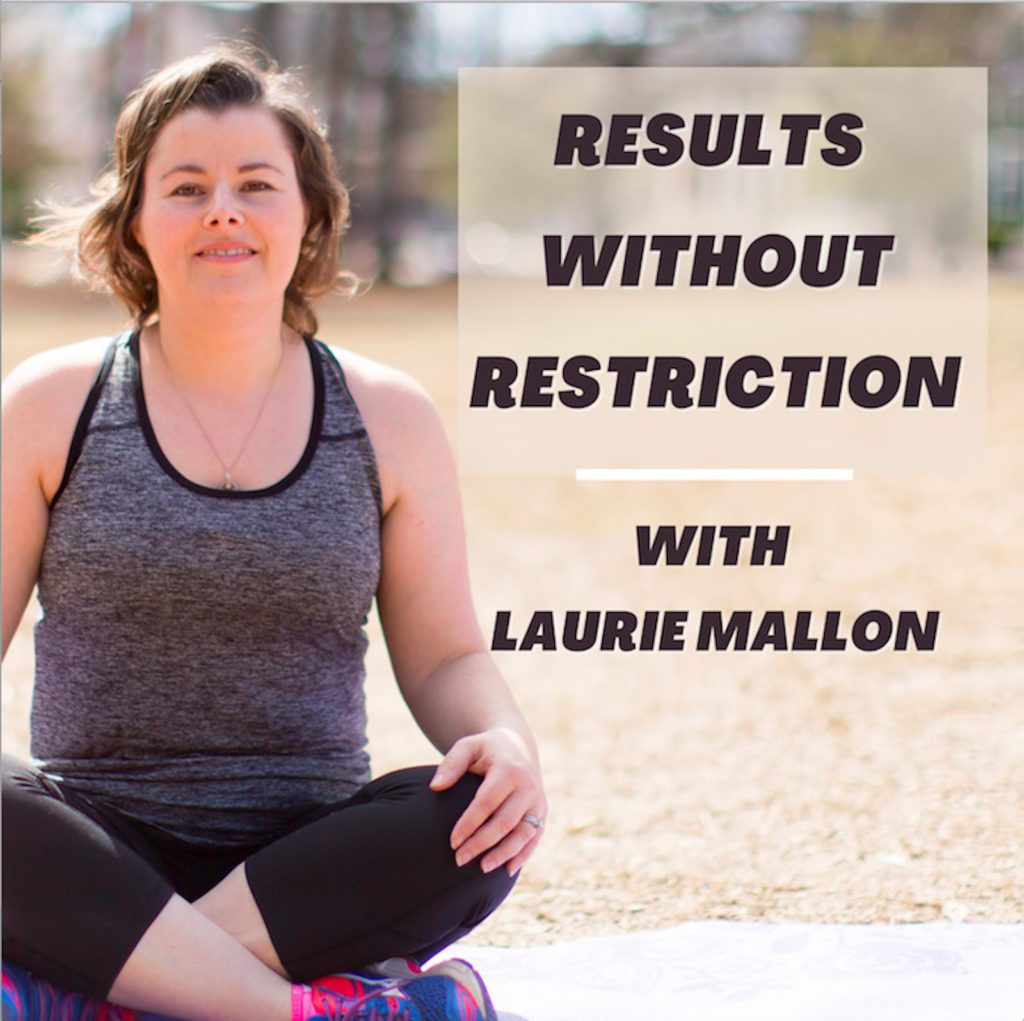
That definition is exactly what I wanted to challenge because it reduces health to a single, narrow outcome and ignores everything else that actually matters. At Results Without Restriction we’re reclaiming the word results to mean something much more inclusive.
Results can be:
- having more steady energy during the day
- improving sleep
- feeling less obsessive around food
- building a consistent movement routine that doesn’t burn you out
- reducing anxiety around eating
- feeling more present in your body
- improving strength, mobility, or endurance
- supporting mental and emotional wellbeing
- creating habits you can actually maintain in real life
None of those require restriction to achieve, and that’s the point.
Restriction has long been sold as the pathway to results, especially in diet and fitness culture. But in actuality, it often leads to cycles of burnout and damage to our body, our mind, and our relationship with food and movement.
So my goal is to reframe:
Not “how do we restrict to get outcomes?”
But “what happens when we remove restriction and focus on sustainable, weight-neutral health instead?”
My Story
In case we haven’t met, I’m Laurie. And for most of my life, I believed that looking healthy and being healthy were the same thing.
If your body closely resembled what society celebrated, you were doing something right.
If you were trying to eat “correctly,” exercise consistently, track, monitor, restrict… then you were “good” or you at least deserved credit for trying! <cringe>
And if you weren’t trying, then you were probably lazy, and whatever health consequences followed were probably your fault somehow.
Then I discovered Intuitive Eating and I started learning more about diet culture, the billion dollar weight loss industry, and the harmful messaging that we are barraged with constantly in the media.
The systems we’ve been taught to trust around health are not neutral. They are shaped by healthism, ableism, racism, and patriarchy.
The weight loss industry, in particular, is rooted in those systems. It has created a problem and positioned itself as the solution. And it has generated billions of dollars doing so at our expense financially, physically, mentally, and emotionally.
That realization changed everything for me.
Where RWR Actually Started
Let’s go waaaaay back. I grew up in a household deeply shaped by diet culture in the 80s and 90s.
My mother was obsessed with health. I have no idea what fueled this, but as far back as I can remember, ‘being healthy’ was a priority for her.
She obsessed with fat-free foods when they became popular in the late 80’s. (remember Snackwell’s cookies??)
She was shopping at hole-in-the wall health food stores before there was ever Whole Foods.
She had vitamins lined up on shelves and took a LITERAL handful every morning.
She had a collection of Prevention magazines stacked in her closet dating back to the early 70’s.
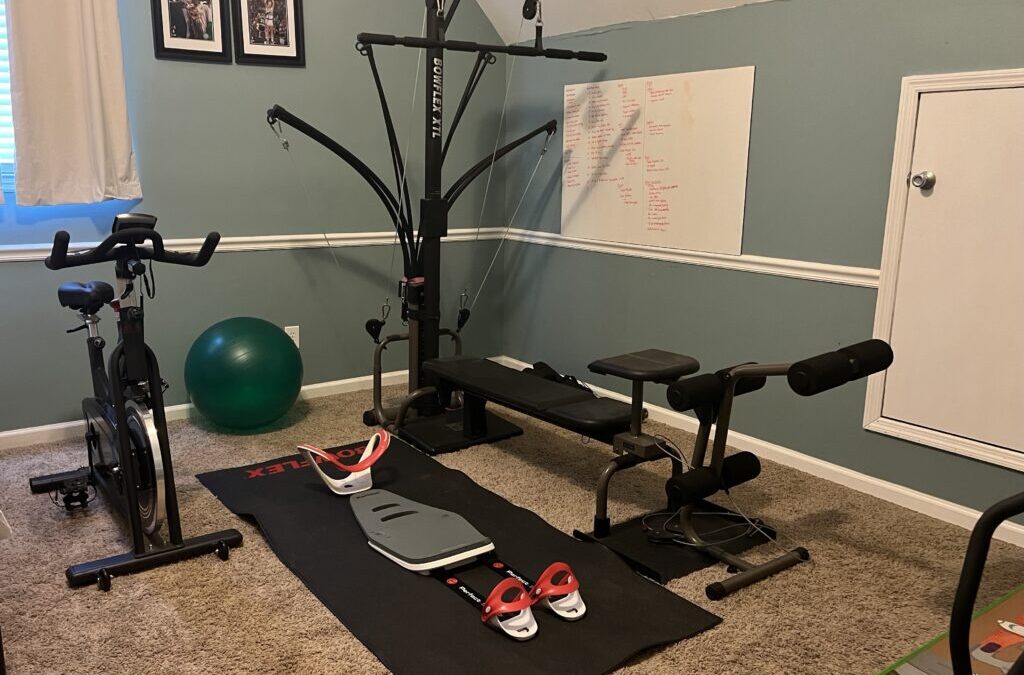
She even set up her cross-country ski machine in the middle of our living room so she could watch TV while she exercised.
Looking back, I can see now how deeply that messaging shaped me. She believed she was doing the right thing, I can’t blame her, she was simply reflecting what the culture at the time defined as “healthy.”
As for us, she always encouraged us to be active. In 1st grade I started gymnastics. Keep in mind, I was petite as a child. I remember telling people that I did gymnastics and was able to “eat as much as I wanted and not gain weight.”
I don’t know where I learned that mattered, but I knew it did. (Did I mention I was in 1st grade??)
I stopped doing gymnastics in the 6th grade and it coincided with going into middle school which also meant growth spurts and other body changes.
I didn’t make the correlation that quitting gymnastics and my body size changing were related, but I vividly remember sitting on the couch one day while my mother put her arm around me and said not to worry because “we’re going to get me healthy again.”
I thought “Again? Am I unhealthy? I feel fine.” No, I wasn’t sick. I had just grown.
Also, I wasn’t worried. Until she said that.
My body had gotten bigger as it was preparing for other changes, which was a completely normal thing for a 12-year old body to do.
But for my mother, someone obsessed with weight, health, and body size, a bigger body was “unhealthy” and a problem to solve.
And from that point on, it felt like there was always something to fix.
The Years That Followed
For the next 3 decades, I moved through what most people would recognize as the “normal” path of wellness culture:
Shakes. Cleanses. Weight Watchers. Fitness challenges. Magazine meal plans. Calorie tracking. Restriction. OTC appetite suppressants.
Falling off the wagon. Starting over again and again.
A closet full of clothes in multiple sizes to accommodate my constant weight loss and regain.
I got really good at managing my portions. Ratios of carbs and protein to fat. I learned how to suppress hunger. I learned how to “earn” more food through exercise.
I stayed active not only because I enjoyed movement, but because it justified eating and helped me to stay small.
At the time, I didn’t have language for what I was trapped in: the system shaped by healthism and diet culture, one that reinforces the idea that smaller bodies are better, discipline equals worth, and control is the goal.
There were other layers too, relationships where body size and appearance were quietly reinforced, a divorce that felt like a release from constant body scrutiny, then a healthy marriage, motherhood, and a life that changed shape regardless of how much I tried to control it.
Even when I discovered Intuitive Eating, I didn’t fully trust it at first. I tried to use it strategically, as another method to manage my body more efficiently. It took a lot of deprogramming and patience to finally let go of the diet mindset I’d cultivated over my lifetime.
Becoming a Coach Didn’t Fix it
While I was pregnant with my son, I became a certified personal trainer and later a health coach because I genuinely wanted to help people feel better in their bodies. But inside the fitness industry, I kept running into the same structure underneath everything:
- weight loss treated as the default goal
- smaller bodies framed as success
- discipline framed as morality
- appearance used as proof of credibility
I coached clients for a few years but finally realized I hadn’t fully healed my own relationship with food, movement, or body image and I could feel how strongly those old beliefs still showed up when a client’s weight loss intention entered the conversation. I had to give up coaching.
How the Platform Has Evolved: From Coaching Site to a Weight-neutral Resource Hub
When coaching became unsafe for me, I branched out with a new business – I tapped into my technical background and started helping other online health professionals around me build their websites and set up online platforms.
I noticed that many of the practitioners working in Intuitive Eating, Health at Every Size, and weight-neutral care, were often the least visible. Not because their work lacked value, but because it didn’t match the dominant narrative of health as control, restriction, or body transformation that the diet industry propagated.
That gap is where Results Without Restriction began to take shape.
What started as a coaching framework became something broader:
a blog, a podcast, and a space to promote the coaches and trainers that had a weight-neutral approach to health and wellness.
I figured if I couldn’t help people directly by coaching them, I could at least bring some visibility to the ones who can.
Why is it Called Results Without Restriction?
Results Without Restriction is the intentional reframing of “results” away from weight-related outcomes and toward meaningful health metrics rooted in real life.
Here, results include:
- stable clinical markers
- strength and endurance improvements
- consistent, supportive habits
- reduced food and body size preoccupation
- improved sleep and stress management
- increased peace with your body
These are indicators that support wellbeing, not just a change in shape or size.
Why We Don’t Focus on Weight Loss Here
Results Without Restriction does not promote intentional weight loss, not because health isn’t important, but because the long-term evidence challenges the idea that intentional weight loss leads to lasting health benefits.
Did you know that while most intentional weight loss efforts do lead to short-term decreases in body weight, the majority of people regain that weight within 2–5 years, often surpassing their starting weight with each cycle.
This pattern of losing and regaining weight, known as weight cycling, is extremely common and can have health consequences beyond what a static weight measure would suggest. Some studies have linked weight variation and cycling with increased morbidity and even cardiovascular risk.
Weight cycling stresses the body: repeated fluctuations in nutrition status and energy balance can lead to overshoots in blood pressure, blood glucose, lipids, and other cardiovascular risk factors during regain periods, creating additional strain over time.
Even when weight loss is achieved, metabolic adaptations (including muscle loss, metabolism slowdown, and hormonal changes related to hunger and fullness) can make maintaining that loss more difficult, making it more likely that the weight will return, which begins the cycle all over again.
So if weight loss:
- is difficult to sustain long term
- is commonly followed by weight regain
- may be associated with weight fluctuations that carry their own health implications
Then we must ask: Is weight loss itself the pathway to health, or is it a symptom of a system that teaches us to prioritize body size over wellbeing?
Why BMI Is Not a Useful Health Tool
While we’re talking about measuring health, let’s also chat about BMI (Body Mass Index). This shows up all the time in health conversations, but it’s not actually a reliable measure of individual health.
BMI is a height-to-weight ratio created in the 1800s by a mathematician, not a physician, and it was never designed to diagnose individual health.
It doesn’t measure blood pressure, insulin sensitivity, inflammation, strength, stamina, sleep quality, stress levels, or access to care.
It reduces complex human health to a single number based on body size.
At Results Without Restriction, we don’t replace BMI with another body-based metric. We look at actual health indicators and lived experience, how you feel, how you function, and what your lab markers say, not how much space your body takes up.
In short, BMI is a crude screening tool at best, useful in population research but not as a definitive marker of individual health.
So What Do We Measure Instead?
If we’re reclaiming the word results, we have to define it in ways that actually reflect health outcomes, not cultural expectations about body size.
Here are metrics that matter:
Clinical Markers that reflect physiologic function more directly than weight:
- Blood pressure
- Fasting glucose and A1C
- Lipid panels (HDL, LDL, triglycerides)
- Inflammatory markers
- Resting heart rate
Functional Metrics that show what your body performs:
- Strength gains
- Endurance
- Mobility
- Balance
- Cardiovascular capacity
Behaviors that support lifelong wellbeing:
- Consistency in movement
- Sleep quality and duration
- Balanced eating patterns without restriction
- Hydration and nourishment habits that align with a healthy relationship with your body
Psychological & Relationship Metrics
Mental and emotional experience matters:
- Reduced food obsession
- Neutral body thoughts
- Less guilt for eating
- Increased autonomy
Quality of Life
Sometimes the most telling outcomes are how you live:
- Do you have energy for daily life?
- Are you comfortable moving your body?
- Do you have life satisfaction beyond your appearance?
These metrics show a healthy life, not just a number on a scale.
What we are NOT doing here
In this space, we are not:
- Judging bodies or food choices
- Celebrating smaller bodies or weight loss
- Using weight, inches, or pounds as metrics of health improvement or success
- Demonizing food or bodies of any size
- “Earning” food or working it off
- Feeling guilt or shame for eating
- Counting, weighing, or measuring (calories, macros, protein, carbs, etc)
- Using BMI as a meaningful health metric for individuals
What I Believe
Today, I don’t track calories. I don’t use exercise or food as a system of punishment or reward.
I practice gentle nutrition. I focus on consistency over perfection. I try to build habits that actually hold up in real life, not just ideal conditions.
And most importantly:
I am at peace with my body.
Not because I love everything about it every day but because I no longer believe it needs to be smaller to be worthy of care.
Trust me, there are days I look in the mirror and I don’t love the situation going on.
But what I absolutely refuse to do is fall down a rabbithole of self-criticism, picking apart the body parts that don’t look the way they did 10 years ago or start feeling bad that I’m not as active as I used to be, or I enjoy more snacks than maybe I need to. My body has given me the greatest gift of my life and I refuse to be anything but kind and grateful to it.
If you’re here and this feels familiar
If you’re tired of starting over…
tired of food rules…
tired of feeling the need to control your body and trying to fix it again…
You’re not alone. And what you’re feeling is the predictable outcome of systems built on restriction, shame, healthism, and patriarchy.
One last note…
While I’ve tried to explain the purpose and creation of Results WIthout Restriction and what it does and does not stand for, we also support bodily autonomy.
That means YOU have the right to make decisions about YOUR own body without coercion, shame, or external control.
That includes decisions about food, movement, medical care, including whether or not to pursue intentional weight loss.
At Results Without Restriction, we don’t promote weight loss as a health goal because the long-term evidence does not support it as a consistently safe or sustainable intervention for most people.
But your body is YOURS, and you get to decide what you do with it.
The goal here is not to remove choice, but to remove the idea that only one type of body can be considered healthy, worthy, or successful.
And also to support a weight-neutral approach to health for those that choose not to pursue weight loss.
Ready to Dig into RWR?
You don’t have to read everything.
Just start where you are.
If you’re stuck in diet culture:
- Why Ditching Diet Mentality is the First Step Toward Food Freedom
- 3 Tips to Start Intuitive Eating with Sarah Burby [PODCAST EPISODE]
- 7 Powerful Ways to Stop Negative Body Talk and Repair Your Relationship With Your Body
- Undo Your Diet Mindset [PODCAST EPISODE]
If food feels stressful or unpredictable:
- Getting off the Diet Rollercoaster with Intuitive Eating [PODCAST EPISODE]
- 4 Reasons You Feel Out of Control Around Food (And How to Stop)
- Identifying Emotional Eating [PODCAST EPISODE]
- 6 Surprising Truths About Intuitive Eating Basics (Before You Dismiss It)
If movement feels inconsistent or overwhelming:
- 7 Ways to Start Working Out Again After a Break (Without Shame)
- Getting Back into Shape: How to Return to Strength Training the Smart Way
- Strength Training for Women: The Time-saving Push/Pull/Legs Split Workout
- How to Set Up a Fully Functional Home Gym and Workout Space
If you’re burned out or overwhelmed:



![10 Legit Apps That Pay You to Walk (Real Money & Rewards) [UPDATED]](https://www.resultswithoutrestriction.com/wp-content/uploads/2024/05/apps-that-pay-me-to-work-out.png)