Subscribe: Apple Podcasts | RSS
Resolutions Without Restriction
Happy New Year!
You know…. that time of year when many of us take a moment to reflect on the past year, decide what we want to do differently in the upcoming one, and commit to making some positive changes by setting New Year’s Resolutions.
In this solo episode I’m sharing the top 5 mistakes that I’ve seen, as a personal trainer and health coach, when it comes to taking that Big Resolution Energy and turning it into sustainable lifestyle changes – and what to do instead! Make Resolutions WITHOUT Restrictions!
Resources Cited in the Episode
Tone it Down: How Fitness Instructors’ Motivational Comments Shape Women’s Body SatisfactionThe resolution solution: longitudinal examination of New Year’s change attempts
Scranton University study on New Year’s Resolutions:
Episode Transcript
(Transcribed by TurboScribe. Go Unlimited to remove this message.)
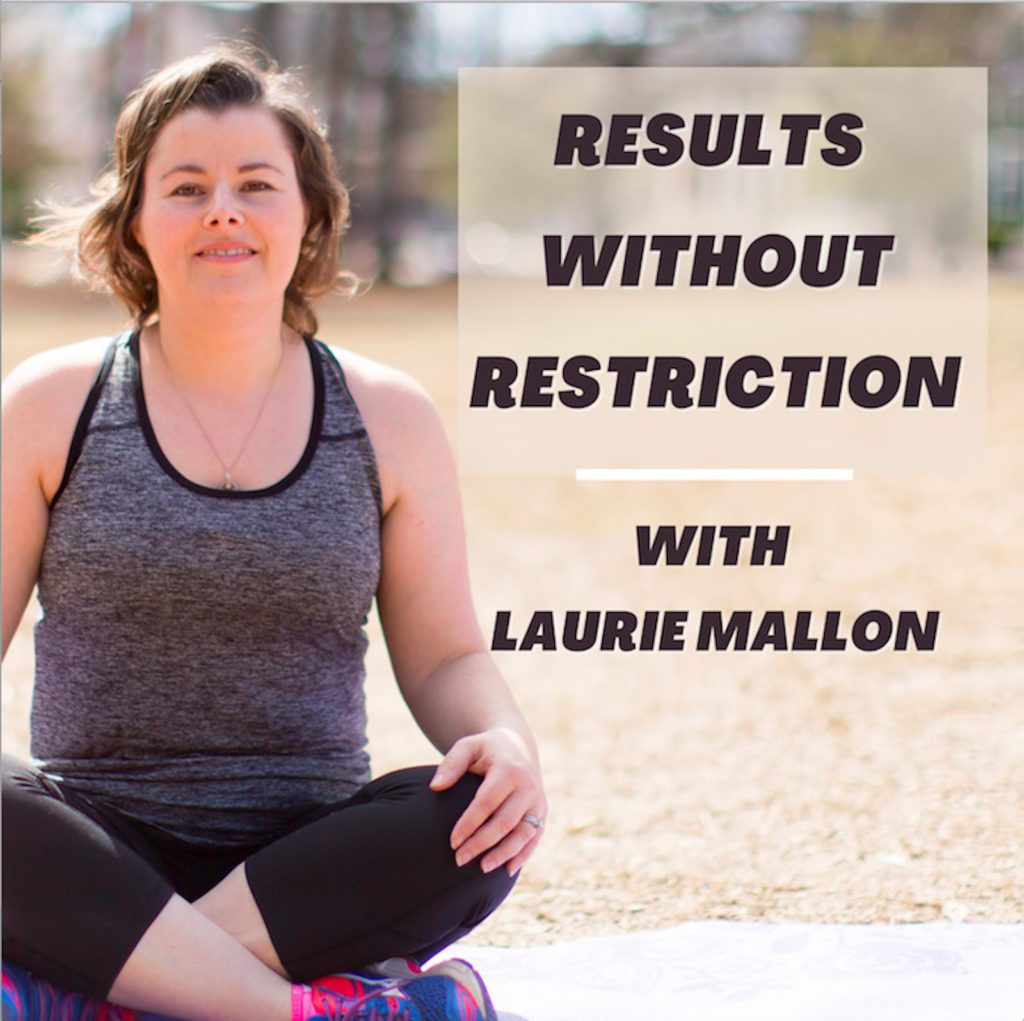
I’m Laurie Mallon and this is the Results Without Restriction podcast. The show where results have nothing to do with weight and everything to do with setting and reaching health and fitness goals that focus on what we’re achieving and not what we’re losing. We’ll talk about deprogramming from diet culture and get expert advice on reclaiming your relationship with food and movement.
Join me on this journey to get results without restriction. Welcome everyone. I normally don’t do solo episodes on the show, but for this time of year when I see so many posts about resolutions and goals and what people want to achieve in the upcoming year, I decided to put something together for anyone who has set a New Year’s resolution or a goal or felt that early January motivation boost and might already be struggling.
So this episode is called Resolutions Without Restriction. Now, I know New Year’s is a popular time for taking a step back and reflecting on where we are, where we’ve been, and where we want to be. For a lot of people, this inspires them to set some new goals and create these New Year’s resolutions.
But why do we feel that motivation to start doing something immediately once January 1st hits? I don’t even know. But I can tell you that in my experience as a trainer and as a health coach helping people to achieve goals and make long-term lifestyle changes, there are five things that people do during the process of setting and working towards these goals that often result in them getting frustrated, getting injured, and then giving up. I’m no longer actively coaching clients, but I wanted to share these missteps that I saw the most and give you some tips on how you can go into the New Year with strategies to help you set and reach the goals that are important to you.
And it might be mid to late January when this episode comes out, or you might be listening in July, but it is never too late or too early to set a goal and start working on it, and these tips will apply year round. So I started to do a little research for this episode, and something I found that was interesting was a study by researchers over at Scranton University, and for the study they tracked the self-change attempts of 200 New Year’s resolvers over a two-year period. What they found was that 77% kept their resolution for one week, and only 19% kept the resolution for two years.
Which means if you’ve set a New Year’s resolution, you’re probably in that group that’s already broken it and moved on. Now this is an interesting study, and I’ll be linking it in the show notes if you want to take a look at it. So let’s dig in.
New Year’s resolution, oops, number one, taking an all or nothing approach. Now, by definition, a resolution is a firm decision to do or not do something. It’s very black or white, right? There is not a lot of flexibility here.
You’re either doing something or you’re not. You’re on or you’re off. One slip up and the resolution is broken.
There’s no room here for mistakes or growth. The resolutions that I see people making in the area of health and fitness are generally around exercising more, eating quote unquote healthier, quitting what they consider to be a bad habit, being more consistent with strategies that help manage their stress, or achieving some type of athletic goal like running a 5K, 10K marathon or participating in a triathlon. And I think that these resolutions are actually all fantastic except for the part where there’s no room for mistakes or exceptions.
Because while it’s great to have this motivation to make changes that can make your life better, it’s not going to help you long term if you get discouraged and quit the first time that you have to skip the gym for a work thing, or you have to bail on your meditation session because your brain is full of bees, I call it, and you just can’t sit still for more than five minutes. Or you go to your first yoga class and you realize that you just don’t bend at all, which is kind of why you need yoga. But how can you do yoga if you’re not flexible so that you get embarrassed and frustrated and you avoid yoga for years after that? Ask me how I know so much about that.
But seriously, that can be very discouraging if you’ve attached a lot of significance to your resolution, what it means to you or what it could mean to you if you could keep it. So let’s go back to that study on resolutions that I mentioned before. The one that said that 77% of the people keep their resolutions for a week and only 19 kept it going for two years.
Well, it turns out that over half of the participants in that 19% experienced at least one slip. And the mean number of slips over the two year study was 14. So what this tells us is that even these participants weren’t 100% consistent with their resolution, but they didn’t give up altogether.
They got back to it and they kept it going. New Year’s resolution oops number two, creating a resolution to do a thing without taking a good look at why that activity is so important and what doing this thing is going to help you achieve. We’re considering the success of your resolution to be based on I’m doing this thing as often as I said, I would like running or walking or meditating or meal planning or whatever.
And that thing that you’re doing, that’s the action. And the reason that you’re doing it is your motivation and what you hope to achieve by doing the thing is your goal. Now, these three things are all very important pieces and they’re all interdependent in the process of creating long term behavior change and just doing the thing without understanding why you want to do it or how it’s going to improve your life likely will not be enough to keep it going.
A lot of people confuse resolutions or actions with the goal. But the way that I explain it is that the action is the thing you do and the goal is the end result. The action is the work that you put in going for a run, making a weekly menu, attending that yoga class.
And the goal is what doing these actions consistently will allow you to achieve. So doing your runs three times a week will help you complete that 5K. Meditating daily helps you manage your stress and can help lower your blood pressure, resulting in an improvement in a significant health marker.
New Year’s resolution oops number three, your resolution is a little too ambitious. Let’s say after the holidays, you are feeling really motivated to commit to a new workout program. But you haven’t seen the inside of a gym since Halloween or maybe even earlier.
But you’ve decided to commit to a running schedule of 20 miles a week right off the bat. Or you haven’t been strength training and you go straight into an intense weightlifting program. Both of these will put you at a risk for injury and physical and or mental burnout, making it likely that this resolution will not last and you will be frustrated and disappointed.
Instead, start where you are and ease into the activity slowly and safely. Better yet, connect with a certified trainer or coach who can help you with that activity that you’re interested in and can create a program customized for your skill level, your lifestyle, your goals, and can make any modifications that you need. New Year’s resolution oops number four, you set a resolution, you have a goal, but your goal is dumb.
And by that I mean your goal isn’t actually smart, S-M-A-R-T. Now you’ve probably heard of smart goals. They are specific, measurable, achievable, realistic, and time bound.
When you create a resolution with a goal that’s missing one of these features, it can lead to frustration, exhaustion, injury, and then you might just quit. Now I could do an entire episode just on smart goals. So this is just a high level overview of what will make your goal smart and help you to achieve it.
Your goal needs to be specific, meaning you’re clear about what it is that you’re trying to achieve. This is essentially the big picture what that’s behind your resolution, why you’re doing this resolution activity. Now if you’re not sure what it is that you’re trying to do by setting this resolution, then pretty soon you’ll be questioning why you’re even doing it at all when you could be doing something else.
Now your goal needs to be measurable, meaning you need to be able to determine without question if the goal has been achieved or not. Without a goal post, how do you know if you scored? Your goal needs to be achievable, and it’s possible given all of the surrounding factors. And in this case, if the goal you set is not attainable, you’re going to find yourself either overtrained, injured, or mentally exhausted trying to make it happen.
Your goal needs to be realistic, and that means that even if it’s theoretically possible, it doesn’t make sense for you to pursue it given the timeframe, your lifestyle, your current skill level or experience. And similar to your goal being attainable, setting an unrealistic athletic type goal can lead to physical and or mental burnout or injury. Your goal also needs to be time bound, meaning you need to set a date of when you’ll assess whether you’ve reached this goal.
And because you’ve been specific, it’ll be clear if you’ve achieved it or not. If it’s completely open-ended, then procrastinators like me will gladly put off doing something uncomfortable in the moment if they can tell themselves they have a whole year to make up for it. So if your resolution is to work out five times a week, and your goal is something vague like to just be more active, but you haven’t gotten clear on why being active is important to you, you just know you should do it.
And you haven’t attached a goal like being able to run an entire 5K by the end of June. You could find yourself wandering around the gym without a plan, without a strategy, and without a way to measure your progress. And then you’ll find yourself finding lots of excuses to put that work out off until quote unquote tomorrow.
Now in New Year’s oops number five, the why or the motivation behind your resolution is something that’s rooted in negativity like shame, fear, embarrassment, revenge, or spite. Or it comes from somebody else, such as a spouse, a friend, or any kind of external pressure to commit to something that’s not important to you. It then becomes a push versus pull approach to change, which is highly ineffective as a long-term source of motivation.
Let’s say that your resolution is to work out regularly, but you said it because you looked in the mirror one day and you didn’t like what you saw, or you realized that your clothes just don’t fit like they used to. This might send you down a negative body image spiral, and then you decide you’re going to use exercise to shrink the size of your body. Or maybe a family member commented over the holidays about you being out of shape, and that embarrassment made you want to start exercising out of spite.
So this is pushing you to start doing something, and these push motivations are going to be hard to maintain long term. You want to be pulled or drawn to your goal because it’s connected to something that is important to you. You want to be more active because it makes you feel good, it makes you feel strong, and there are a ton of health benefits to regular physical activity, such as reducing your risk of chronic diseases and improvements in health markers like blood pressure.
Plus, it’s a great way to manage your stress. And these are all things that are important to you, which has shown, and I’m going to link these studies in the show notes as well, three things. One, we’re less likely to be active if we feel shame about our bodies.
Two, women who view their body more in terms of how it looks than how it feels, we’re less likely to exercise. And three, those who exercise for weight and appearance-based reasons exercised less consistently and reported more symptoms of eating disorders and depression. So if your motivation for setting a resolution is embarrassment about how you look, any body shame, or you’re feeling pressure to change your body’s appearance, then that’s a good indicator that the resolution will be short-lived, which actually may snowball and create more shame.
These are the five things that I see trip people up the most when it comes to harnessing this new year motivation boost to do something health or fitness related, and I’m going to recap these tips. Tip number one, approach your resolutions with flexibility and don’t let minor setbacks derail you altogether. Give yourself grace and get back to it.
Tip number two, identify the why behind your resolution and set a goal that gives your resolution some context. Don’t set your resolution in a vacuum if you want it to stick. Tip number three, set a realistic resolution that’s at the level for today you, not tomorrow you, not six months from now you.
Over-ambitious resolutions can lead to burnout and injury. Take it slow and you’ll be more likely to keep your resolution. Tip number four, set a goal for your resolution that’s smart.
It’s specific, measurable, achievable, realistic, and time-bound. And tip number five, make a resolution based on something that’s important to you based on a positive focus of the achievement that you’re working towards. I hope this information has been helpful for all of you, resolution and non-resolution centers alike, as we head into this new year with new goals focusing on sustainable self-care for our physical, emotional, and mental health.
Thanks for listening, and if you liked this episode, go ahead and leave us a review on iTunes or wherever you listen to podcasts, and be sure to subscribe so you’ll be notified when the next episode is live. Check out our show notes for this episode where you can find any of the links and resources that were mentioned during the show and connect with a health and wellness provider who committed to helping you ditch diets and achieve results without restriction. Thanks for listening, and we’ll catch you in the next episode.
See All Podcast Episodes
Subscribe: Apple Podcasts | RSS