Subscribe: Apple Podcasts | RSS
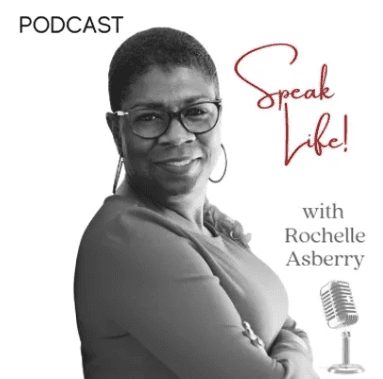
In this episode I chat with health and wellness coach, Rochelle Asberry, who happens to ALSO be an inspirational public speaker, an author, a podcaster, and the president and founder of a non-profit organization.
Table of Contents
We talk about the gift of mindfulness, the importance of being intentional and present, and how we can show kindness with our attention. Specifically, we talk about Rochelle’s book, Joy is in the Now Place, how mindfulness and being present have impacted her life, and how you can start to practice mindfulness to see positive changes.
Ro’s Books
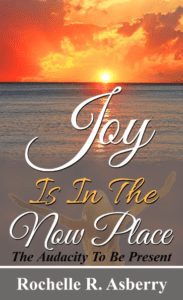 Joy is in the Now Place |
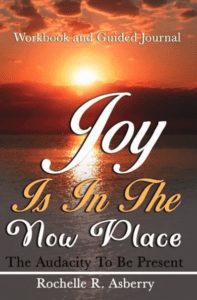 Joy is in the Now Place: Workbook and Guided Journal |
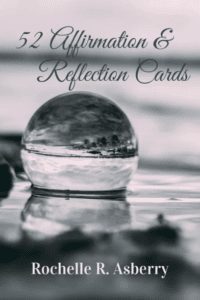 52 Affirmation &
|
About Ro
Rochelle R. Asberry is a sought-after Inspirational Public Speaker, Author, Educator, Health & Wellness Expert, and CEO/owner of Dominique’s Enterprise LLC (a health and wellness company). Also, Rochelle coaches in the following areas: Health & Wellness, Leadership and Personal Development. As well, she brings decades of Marketing/Business Experience.
Because of her life’s mission is to continue to make a difference, Rochelle is the Founder and President of the nonprofit, Kind Hands Foundation, Inc. Their mission states, “Knowing someone cares transform lives, strengthens communities, and ultimately inspires people to pay it forward.” Rochelle is a champion of positive change.
Another accomplishment is her book, “Joy is in the Now Place” subtitled “The Audacity to be Present,” which is part of Indianapolis’ History at the Nina Mason Pulliam Special Collections Room, Purdue Dauch Alumni Center Library in West Lafayette, Indiana, Amazon, and other establishments. Most recently, she has written the corresponding Workbook and Guided Journal to “Joy is in the Now Place”.
In addition, Rochelle has received recognition for her successful webinars: Joy Now masterclass, No Regrets—Pivot with a Purpose program, Honor Your Journey and many more.
Rochelle has created a new podcast called Speak Life with Rochelle Asberry. This podcast will inspire you to speak life into every situation. It’s filled with practical tools, stories, and interviews.
Moreover, Rochelle is a devoted wife and mother. She is an active member of her church for over 25 years. Rochelle loves to have fun, travel, read, learn new things, and enjoy eating different healthful cuisines.
Connect with Ro
- Owner/CEO-Dominique’s Enterprise LLC
- Pres/Founder-Kind Hands Foundation INC
- Ro’s podcast, Speak Life with Rochelle Asbury
Episode Transcript
Welcome, everyone. I am here with Rochelle Asberry, who is an inspirational public speaker, author, educator, health and wellness expert, and the CEO of Dominique’s Enterprise, her health and wellness company.
Rochelle also offers coaching in health and wellness, leadership, and personal development. Rochelle is also the founder and president of the nonprofit Kind Hands Foundation. She’s the author of Joy Is in the Now Place: The Audacity to Be Present. Rochelle is also a podcast host, and her podcast is called Speak Life with Rochelle Asberry.
Welcome, Rochelle.
Rochelle: Wow, thank you so much for having me. I really appreciate that.
Lori: I’m really excited because what your area of expertise is being present. And I think this is something that we’re all struggling with right now. So, as much advice and guidance as we can get on this topic, I think we all, we all really need.
So, this is a really important topic, particularly, you know, with COVID and adjusting to our quote-unquote “new normal,” the internet, you know, having screens everywhere. So, being present has become more of a challenge. So, I cannot wait to hear what strategies and tips that you have for us on this topic.
Rochelle: Okay. Well, I tell you, you’re absolutely right, Lori, that you know, there’s so many distractions, and it’s so hard to be present. And there are times that, you know, things are just coming at us like left and right. And what we have to do is be intentional because I don’t believe it sometimes comes, you know, naturally. And a lot of times, especially as, as women, you know, we’re great multitaskers. We’re doing this, and we’re doing that.
And, and, uh, but we have to be intentional because I believe that when we’re present, that’s where life truly is, Lori. I mean, because a lot of times we’ll go, you know, be in the past, and sometimes it’s great to reflect. I love to reflect, but I don’t like to stay there. But, um, you know, we get into that would’ve, could’ve, and should’ve, or if we, you know, we get too far ahead, you know, in, in the future. And it’s easy to kind of do that because you know, we’ve been in this pandemic situation.
We don’t necessarily know when, when it’s all over. So, that can cause some anxiety and some restlessness. So, but I always tell people, you know, if we just be intentional about just taking a pause, you know, taking a couple of deep breaths and just sit in the moment.
It really is something that we have to just, you know, be intentional about and be in the moment because life is truly right now. Like, you know, you and I are sitting having this wonderful conversation, and I’m really not, you know, thinking about what I need to do after this conversation or what what I didn’t get done before because life is right now, and I really want to enjoy this time.
Now, we have to practice it. It’s, it’s just like a muscle. The more you use it, the stronger it is. So, I just tell people, you know, just take, you know, just a minute or two at the beginning of your day, middle of your day. I, I kind of do it throughout the day where I feel myself getting anxious, or I feel myself just kind of just feeling like I’m all over the place in quote.
I just have to check in with myself. We’re really good about checking in with every, every person, spouse, or children, people we care about, but a lot of times we need to check in with ourselves.
Now, you don’t have to necessarily be audible about it, but you, you know, I have to ask myself or think about what’s going on, how am I breathing? How do I feel? How does my tummy feel? Do I feel like thoughts are just racing? So, that’s a real good indicator for me, and I try to share that with other people, to check in and say, “Hey, okay, I need to pull it in.
I need to just sit still. I need to be present. What is going on around me? What am I feeling?” And I think when we do that, I think we feel so much better. I know that’s kind of a long answer, but that’s some of the things that I always recommend.
Lori: Well, I always like to take a minute before we get really deep into the topic and ask my guests to share what their story was. Like, what brought you to the place where you became a philanthropist, a health coach, an author, and focused on being present?
Rochelle: Well, how long do you have? No. Um, okay, all right. Well. Well, you know, even when I was, um, when I was young, I always had that, um, propensity to just, you know, check in and, and, you know, check on with people. And, um, I’ve always been a person to inspire and to empower and always to encourage people, to do well. And when I was young, I always journaled. I always wanted to write things down.
I didn’t want to miss a moment, especially if something just impacted me positively or maybe sometimes not so, not so well. But, um, that’s kind of like my, my backstory that I’ve always have, I’m a people person.
My husband says, “How can you go into the supermarket and come out with two friends?” And that’s just who I, that’s just who I am. And I know that we are so much more alike than we are different. Everybody wants to be heard and listened to and supported, and everybody has a story. Not saying everybody was going to share it, necessarily.
But I love when we share it. I’m a storyteller. And I think that connects everybody. I think that’s so, I think it’s cleansing, I think it’s detoxifying when we share, when we share with one another, because you know what? “I can really relate to that.” Maybe the characters are different, but I can really relate to that, so.
Lori: So, what brought you to the point where you became a health coach? What was the journey there?
Rochelle: Okay. Well, I’ve, um, when I came out of, when I graduated from, from Purdue University, I went into corporate and, uh, you know, into marketing and branding and things like that. And I loved exactly, you know, doing the work I did. But what I noticed, you know, with people that I was meeting was the fact that they were so stressed out. You know, they just couldn’t find any, any time or feeling like they deserved time to take care of themselves.
And what kind of led me to that is, you know, I just had to be clear and honest with myself because we can have all these lofty goals and we can have all these great action steps. But at the end of the day, if we’re not taking care of ourselves, then it’s for naught. For me to even, you know, share that with other people, I had to tap into, to, you know, taking ownership of my own health. The whole, you know, self-care thing.
I’m also a licensed massage therapist when I came out of corporate. And so I just saw how massage therapy, you know, helped people so much, and I saw the transformation on that. And, um, I just started branching out from there because people started seeing my brand as, you know, health and wellness.
And it just one thing led to another, and I just start thinking, um, again, intentionally, how can I help people? I love coaching, I love everything about that. And it gives people a chance to take ownership, that they can be a partner in their own lives. It’s one of my tag names for my company, to be a partner in your own health.
And the best wealth is good health, so it just kind of snowballed. I mean, it’s just, I, I’ve seen a lot, and it’s like, “Well, you know what? I just want to be able to share some stories with people.” And, um, it’s been inspiring for me. It’s been healthy, healthy, and inspiring to other people too, so.
Lori: So, you have a book that you wrote. It’s called Joy Is in the Now Place: The Audacity to Be Present. So, tell me a bit about this.
Rochelle: Well, again, it kind of goes back to what I was saying about life is right now. It is right, literally right now. And time is, is, is the most, one of the most precious commodities, and I always tell people how are you spending it? That’s one thing I believe that it’s, how would I say? It’s equal across the board.
It doesn’t matter if you’re tall or short, if you wear glasses or not. We all get the same amount of time, so, so that’s, that’s, that’s equity right there, right? But again, it has to be how you’re spending it. And I’ve been in the process of trying to share my story, and when I came to the point of Joy Is in the Now Place, it just came to me, that joy is right now. It is a place.
But again, that whole, you have to be intentional. You have to have that audacity to be present because I’ve learned just, I’ve been around people that have shared their stories too. I’ve even been with people towards the end of their death. They’ve never said, “I wish I would have worked harder.
I wish I’d have worked more.” They always come back to the part, “I wish I had more time for,” fill in the blank, “my husband, my children,” you know, “my community.”
So, again, that really just really pressed on my heart how important it is to talk about the presence of right now. That’s where life truly is, that’s where joy truly is, and I’m a storyteller. I’m a writer. At this particular time, it was like, okay, I need to give birth to this book, right? And, uh, I kept saying, “Well, maybe not right now.”
So, I tried to shove it down, and it’s like, “Okay, if I don’t give birth to this thing, I’m going to just like blow up.” Throughout this whole journey, I wanted to write just some defining moments.
And we all have them, Lori. We all have these defining moments in our lives where we have to tap in and, and take a look at what’s going on right now. I think, too, that’s one of the precious gifts that we can give our children, if you can spend anything.
I mean, we can buy, I would say, tangible gifts all day long, but if we take the time to spend the time, that’s so valuable. That is priceless. I remember one time, and I’ll keep it real short, that, um, here, I was in corporate, mom, a wife, um, juggling everything.
And my mom called, and she said, “Hey, guess who’s coming to visit?” I’m like, “Okay.” Who? And of course, she’s like, “I’ll be there in a few hours.” And I’m like, “Oh my God.” The way I was then and the way I am now, it’s like family is so important. So, you know, meanwhile, I’m thinking about, you know, all these projects I have to do for work, and my daughter’s bouncing up and down.
The interesting thing about it, I decided keep the main thing the main thing. And the main thing was being present with my mom and being present with my daughter.
And I remember during when, when my mom showed up, my daughter was like, “Mommy, I want to go get ice cream right now.” And I’m thinking, oh, this is really cute. Mom’s here. I got laundry to do, I have some deadlines to meet. And it was interesting how my mom just looked at me because my mom, um, was from that old school.
You got to get all those chores done, and you put everybody else first. And so I had, I, it, it was like, Lori, I was caught in the middle of a stare-down, you know? My mom’s looking at me like what I’m going to do.
My daughter is looking at me like, “Hey, I want some ice cream.” And I thought to myself, and I had, I had some laundry going in the, in the washer. I just basically basically threw my hands up and said, “Okay, grab your jacket. We’re going, we’re going to get ice cream.” She’s like, “Can Grammy, can Grammy come too?” I’m like, “Yeah.”
And it was so interesting, the dynamic between, you know, here we got, you know, three generations. And later on my mom told me she was proud of me. She says, “I don’t know if I would have done that because back then,” in quote, “she was managing the home and she was working, and it was the, the thought was, my God, you got to have that laundry done. You got to have it all folded up and put away.” And you were like, well. I’m like, “Well, it will be there later.”
Lori: Where’s it going to go?
Rochelle: Where’s, where’s it going to go? And here my daughter is an adult, and one thing I, I try to tell people, that time is important, being present, because my daughter, we laugh about it now, but never, she she’s never, she never said to me, “Mom, you really fold my clothes well.”
But she remembers the time that we we, that I took a pause to, to do something with her or with the family. That’s the legacy that is really important. That is priceless. I remember one time, we had a great time. We had ice cream and at this little, uh, ice cream shop. They had like games, and so she was playing checkers with grandma, and she still, my mom’s gone on now, but she remembers that.
My daughter remembers that, and I remember that. So, those are the kinds of stories I shared in the book, and I’m, in the book, it also has each chapter has a blank page for you to reflect on, to have your defining moment. And it also has a matching, um, workbooks. Cuz people were saying, “Oh, Rochelle, I really loved your book, but I want more. I want to go deeper.” So, I got a manual, uh, a guided journal and manual to, to the book, so.
Lori: Oh, fantastic. So, there’s, so there’s, so that as they’re reading, they can kind of take it a step further and really do their own reflections and figure out what that, whatever the, the point of the story was or that chapter can means for them and, and really tap into whatever that brings up for them.
Rochelle: Exactly. And when you do that, Lori, that will allow you to be present. Cuz you know, it’s hard to, it’s hard to go deeper if you’re not present.
Lori: Sure. Let’s talk a little bit about how being present impacts your health. Cuz you talked about, you know, physical health, mental, emotional, financial, all these things. How does being present impact all those areas?
Rochelle: Well, I think, um, a couple different ways. Number one, when you’re present, you’re, you’re hearing, you’re, you’re tapped into, oh, what is that, what is that, why do I feel discomfort when I make that particular movement? What does it mean? I think that will make you healthier because it’s part of self-care.
You are right there at that given moment knowing what’s going on with you. And then too, when you take a pause, you’re really concentrating on your breathing. If we just go a mile a minute and then just collapse at the end of the night, that is not as healthy as for us of being present.
We get clarity when we’re present. I, I do pray a lot and I meditate a lot, and I tell people too, that do that. I said, a lot of times we’ll pray about something and they’re like, “Well, but I didn’t get an answer.”
And my question is always, “Have you been still? Have you been quiet enough?” Cuz a lot of times the answer will come to us, but we’re going a mile a minute. So, it just have so many, um, benefits. And again, you have to be intentional because, as women, as working moms, we have conditioned ourselves to be great multitaskers.
And that’s great, but at the end of the day, what the quality of health, um, comes from is being intentional and taking time to be present.
Lori: So, you’re talking about being present as a form of self-care, and that impacts your different areas of your wellness, your physical health, mental health, because you are now physically and mentally connected. That body-mind connection, as you’re kind of, you know, evaluating what’s happening right now.
So, you can tap into physical reactions, that ton of bricks, you know, when I’m doing this and it feels like I’m weighed down. Okay, what is that telling me? I’m stressed out about what I’m doing. Oh, well, here’s, here’s information for me. I can now take this. How how can it be less stress?
What does this task look like that, how can I make this easier? How can I delegate it? How can I break it up into smaller pieces so that it feels easy for me, or manageable.
And you talked about breathing and meditation and really just using that to kind of slow your nervous system and really just have that connection, again, the body-mind connection, when you regulate the breath, you’re regulating, you know, your heart rate. And you’ve probably read, uh, the relaxation response?
Rochelle: Mhm.
Lori: So, all about how that, you know, helps to manage anxiety and stress and things like that to really bring you back to a state where you feel comfortable.
Rochelle: Exactly.
Lori: So, when you do feel yourself getting stressed about doing things, taking that pause, taking that breath, tapping into, okay, how do I feel? What’s going on here? How can I make adjustments to my environment, to my response, to to make this, you know, better for me.
Rochelle: Exactly.
Lori: And you said that as women, I find this funny because you said as women, we’re great multitaskers. I am the world’s worst multitasker. In fact, I feel like multitasking is is a a farce. I feel like nobody’s really good at it. Um, people kid themselves that they’re good at it, but honestly, if you’re multitasking, you’re not doing anything, any one thing very well, you’re doing everything maybe mediocre.
So, the myth of multitasking, I’d like everyone to just kind of, let’s all do it together cuz I’m not good at it, so I don’t want anyone else to do it either. Let’s all just decide right now we’re going to give up on on all this this dubious honor of women being good at multitasking. Let’s all commit to just doing one thing, being present for it.
Rochelle: Yeah.
Lori: And then everything else, like the laundry, it’ll be there.
Rochelle: That’s right. That’s exactly right. Again, I think society, the norms for women, uh, is to do everything for everybody. And I’ve watched that in my family with some of the matriarchs that, you know, I came from a family of of great women that love to cook, and they did that for and took care of everybody.
But I found myself, found them standing in the, in the corner in the kitchen watching other people just enjoy this great meal and they’re just trying to squeeze in a forkful.
It’s something like you said, to some degree, it’s unrealistic. But I still think we do it. I think we we try to do it as as working women, as community leaders. I have learned over over the years, we get busy, but that doesn’t mean we’re effective. And I had to learn how to, um, say no.
And I, I married a person that has really good boundaries, and he, I don’t know if he coined it, but he told me, and it was like, you know, the heavens opened up. He said, “Rochelle,” he said, “no is a complete sentence,” because I think I found myself saying the word no, but then I’m explaining why.
Lori: No, no, period, the end. That’s it. That’s all I’m saying.
Rochelle: Exactly. But again, um, Lori, this is all about being intentional. I don’t think that this comes naturally. I think, um, it has been, um, something that we have to first of all, one of my power words, I love the word decide. Um, it’s a small word, but when you decide, that’s when change happens. We have to give ourselves permission, too, that it’s okay.
That it’s okay not to try to, you know, juggle 10 balls. And you know that you know that you can’t keep keep them in the air, but this is how you’ve been conditioned to do this because sometimes, and I’m just talking about the people I know and people have shared with me privately, that, oh my God, on the surface they look really great that they’re doing all this. But late at night, they’re, they’re falling apart cuz they don’t want to tell someone that I just can’t do it anymore.
And, uh, cuz we’ve been conditioned to think we should be doing it all for everybody. And, um, sometimes that does us an injustice, and I think it does the same for people that we love, you know? When we get back to flying again, I haven’t start flying again. But you have to put them oxygen mask on your own face before you can help someone else.
And so, I have to constantly work work on that because I know the more you do in your career, or more you do in your community, you know, sometimes people will add more to your plate where you just have to say, “I really appreciate, but I won’t be able to do that.” It’s going to be okay if I if I add myself to the equation of taking to do care of myself.
Lori: I love that. Let’s talk real quick, and the conditioning of health, of of women, of doing everything and taking care of everybody. We know who’s, we know who’s behind that.
Rochelle: Right.
Lori: Yeah, we’re all done with that. We’re, we’re unsubscribing from that mailing list.
Rochelle: Oh, yeah.
Lori: And we’re, we’re putting, and I love that you said boundaries, because, I mean, that’s, that’s it, saying no, saying, “This is what I can handle.” Talking about conditioning, we’ve been conditioned to think, okay, saying no and saying, “I have limits or I can’t do everything,” is a weakness, and it’s actually a strength.
It’s actually saying, “Listen, I recognize my capacity, my bandwidth for what I can handle.” And everything else outside of this box, I’m holding my hands up, everything else outside of this is is just going to be a no, period. Not an, not an, not a, not an explanation why, I’m not going to, I’m not going to tell you why, I’m not going to give you a reason or excuse. The answer is no, this is what I can handle. Thank you, goodbye.
Rochelle: Exactly.
Lori: And that’s it, and that’s self-care. And that’s really putting on your own oxygen mask so that you can do other things for other people. Otherwise, what can, you know, you’re, you’re useful to everybody and yourself.
Rochelle: Exactly. But, you know, it goes back to like what I was saying, but you have, you have to decide on that, Lori. And I think when you take the time to sit still, and I think, you know, um, not to belabor this, but wh- when I think about the pandemic, I think the pandemic with all its challenges, also has, has given us an opportunity to be still and kind of connect. And, uh, like I said, you know, earlier, keeping the main thing the main thing. Saying to saying yes to the things you want to say yes to, and saying no to the things that don’t bring you value and being okay with it.
Lori: Mhm.
Rochelle: That’s the other part. We can spend some more time on the other show talking about being okay. Being okay with it, you know, that it’s, it’s okay. You know? So, again, but it goes, uh, you know, it, it’s something that, um, that you have to allow yourself to be authentic and to be present, um, to learn more about yourself. And I used to say a long time ago, it’s almost like going to, which we don’t do anymore, uh, going to buffets and say, “You know what? I’ll take one piece of that, and I’ll take two pieces of that, and I don’t want anything, I don’t want any of that,” and being okay.
What has happened along the way, even for my mom’s generation or my grandmother’s, some have lived, um, lived this false narrative because in some circumstances, women didn’t support each other in that self-care thing. Um, if you’re not, you know, juggling, you know, 12 things at one time, then somehow, not saying that people would say it, but you’re like, “You’re a slacker, what do you mean?”
What do you mean? Cuz you know, you can’t be down. Mom can’t be down. Or, you know, you know, a person that, that, uh, you know, does it all, what do you mean? Cuz we’re not going to necessarily say it because we’re, sometimes we get afraid because we won’t have the support.
Lori: Mhm. I agree with that 100%. Women have not always been supportive of, you know, this boundary setting and, I really like what you just said, it kind of tied everything together about when you decide, you make that decision to to have stillness and tap in, then you can, you know, check in physically, mentally, emotionally, and that’ll help you set a boundary.
Rochelle: Exactly.
Lori: And identify where your limits are. I love that. Can you share with us some of the tools and the strategies that you use with your clients to help them be more present? I know you mentioned breathing techniques and meditation. Um, are there other things that you have that you recommend or that you use with your clients?
Rochelle: Journaling is another thing, too, because when you journal, you are bring, being present. Um, so that’s, uh, another useful, useful tool. I tell people that they can also, you know, put on some relaxing music, especially music that doesn’t have any words to it. How I take my approach is it’s not really a strategy because if we start, if I start using the word strategy, then sometimes high achievers start, um, adding so many other different things to it that sometimes we talk ourselves out of it.
So, I just, you know, from my, from my vantage point, like just sit still. Just sit down.
They’re like, “Well, well wait a minute. What should I be doing with my hands or my legs or what?”
Lori: Just sitting still is hard. I remember first learning to do meditation. I went to a doctor for for some severe anxiety, and he had me doing meditation, and I was like, “Uh, no.”
“No.” He’s like, “No, all you do is you, you know, you just sit and you breathe,” and I’m like, “No, no, no. Like, what do I do?” Like, you said, like, what do I do? I should be doing something. And I was so like fidgety, antsy, like physically, I had a really hard time sitting still.
Never mind like the mental part of just kind of like trying to, and that, that’s really hard if we’ve been, you know, we’ve got this pattern of or this habit of, okay, we’re going through our mental to-do list, we’re going through um, what do I have to do for so-and-so? I have to do this for work and this for home and all this. So, we’ve got some habits of of staying in action all the time, so that being still is, I mean, that is a task. That’s a job right there.
Rochelle: It is. And, you know, I like to meet people where where they’re at. And that’s how we have that dialogue, if I’m, you know, working with someone or coaching someone or coming alongside someone that, you know, tells me that they have major anxiety. A lot of times, you know, we’ll do some things like a, what I call a tense and release. You know, starting from their toes and, you know, scrunch it up really tight and then let it go all the way up.
And sometimes it’s kind of funny, you know, it’s like, “Rochelle, you want me to scrunch up my face?” I’m like, “Sure, go right ahead. I’ll do it too.” And, you know, just having that distraction, that pause, and like, “Huh, okay.” So, some of those like little bitty things. It doesn’t have to be grandiose. It’s just we just start, we just start right right where you’re at, you know? So, that’s, that’s one of the things, too.
Lori: I love that. Can we talk a little bit about your Kind Hands Foundation?
Rochelle: Sure. It is a, uh, nonprofit organization, and it empowers and encourage and inspires disadvantaged, uh, youth, women, and seniors. And we supply them with education and resources. Um, it’s inspired, um, from my, from my grandmother. My grandmother was a maid. Uh, she worked extremely hard, but she was the kindest person. And when I was a little kid, and she was a huge giver. She didn’t even have that much.
But she would take her little cart, I hope I don’t well up, um, throughout the community with food, and here she, you know, she barely had food herself. And she would give it to, you know, whoever she could.
And I used to go with her sometimes, and sometimes as a kid I, you know, I didn’t want to do that. And I said, “Grammy, why do we, why do you do that? Why do we, why do we have to do this?” And she says, “Well, well what side, what side do you want to be on, the giving or the receiving?” And I’m looking like, this is like a half a chicken here, you know. And you, you know. So, at the time I didn’t see, I didn’t see it. But over, over time, and my mom’s the same way, just a huge giver.
And, but they were so kind. Like I told, you know, I try to convey to people, yeah, we can just, you know, give somebody something. But if we’re not kind at it, you know, everybody, I don’t care where you grew up, or what the outside wrapper looks like, everybody want to be respected. Everybody want to be listened to, everybody wants someone to care.
So, you know, for a long, long time, I said I really wanted to have a nonprofit organization that had that same kind of sentiment, that they care about people and, you know, and want to help. And I have people like when we did an an initiative, one of our initiatives I’m most proud of because we’ve only been able to exist for a little bit of time, is that when we came alongside to help, the women at the Coburn Place for Domestic Violence.
And when we were going out and marketing to ask people to come alongside to support, there were many people that were saying, “Well, you know, I would love to give, but, you know, I only have $2,” or, “you know, I, I have, I can, you know, give,” you know, “two bars of soap.” And it was just like, “Oh my God, thank you so much,” because your little bit added with, you know, Susie’s little bit can make a powerful impact.
And so because of that, we were able to, um, donate like 5,000 body care items to the Coburn Center for Domestic Violence. So, my grandmother would always say, “You may not understand it now, but you’ll understand it when it’s time.” And I’m like, “When is that, Tuesday, Grammy?”
So, it’s a wonderful, a wonderful organization that wants to, that always want to give back, always want people that have a kind heart. It’s about kindness. Kind hands, cuz that’s one thing I remembered about my grammy is that even though she had swollen knees and swollen hands for the domestic work she did, she had the kindest hands. I always remember she had kind hands to, you know, rub my shoulder. She had kind hands when she touched my face or my brother’s face, you know, that’s it in a nutshell. Before I just start boohoo-ing.
Lori: Rochelle, that is a beautiful tribute to your grandmother, and what a great way to serve your community and pay it forward and show up for for other people. That is beautiful.
One last thing, I want to talk about your Affirmation and Reflection Cards and how this kind of ties into being present. Can we can we chat about that?
Rochelle: We sure can. As you can tell, I’m a woman with lots of words, right? I believe that words have creative power. And it creates. And when we say things, it starts the process. They’re like seeds. And so it was just pressed upon my heart, um, because people ask me a lot of questions. How are you able to do this? And how are you able to do that? Um, what keeps you motivated? What keeps you inspired? How do you do it, Rochelle? You know, run a company, you do things for the community, you know, have a family. How do you do that?
It was just put on my heart just to start collecting the words that I say. And so I start putting those things together. Every cell in your body hears what you have to say. And so people challenge, she’s, “Well, if I don’t feel great, I don’t want to say I feel great.”
But, you know, I’ve always been from the vantage point that words are powerful. Because if you hear it enough, it’ll start creating the behavior, the thinking, you know? Just like the negative part of it. I mean, it’s, it’s something about the way our bodies respond to words.
So, I just started writing down the, the words, the phrases that I’ve been saying to myself, and my daughter, and people that I love, you know, over the years. And I just compiled it and, you know, I got tons and tons and tons, but I know what I wanted to do is to put together like 52 affirmations that people can, you know, say throughout the whole week and they can journal it, and they can reflect on it, what does it mean to them?
And they’re simple things, but it has such an impact because I just brought that out probably a couple of weeks ago, and I’m getting this feedback from people like, “Thank you for for, you know, for your affirmation and reflection cards. It’s, it’s grounding me. It’s getting me back to that, you know, being present and being, you know, being my biggest cheerleader. It has, you know, it’s helping to change me. It’s transformative.”
Lori: That sounds like a really good way to, you know, take a pause. Take some time for yourself, set up a boundary, say, “This is what I’m doing right now.” And like you said, pull a card, do some affirmations, reflect on what that means, journal about it and really tap into what comes up for you in, in, in it physically, mentally, emotionally, like just in your thoughts, in your feelings to just have that experience of this is where I am right now, and this is how I feel about what’s happening when I read this card, and what does this mean for me, what can it mean for me?
Rochelle: Exactly. Exactly. And you know what, too? I always have to press upon people to realize, um, that it doesn’t have to take a long time. Um, sometimes like even, you know, when I say about being present, be still. If you want to know something, be still and know. Um, now of course, that th- that’s coined from the Holy Bible. So, it doesn’t have to be 30 minutes.
I think sometimes we get into because I have people contact, “Oh, you know, I would love to do that, Rochelle, but I just can’t be still or be present for a whole hour.” It doesn’t, some of the greatest times I’ve had is just allowing myself, deciding just to sit for 2 minutes or like I said, you know, doing the um, tense and release. I’ve even taught, you know, some people that have, you know, hard time of breathing.
And so, you know, I do a straw technique about taking a straw and, you know, inhale, and when I inhale the, um, straw, um, but, you know, blowing through the straw, what would also, you know, allow you to to calm down. But again, it doesn’t take a lot of, it doesn’t take a lot of time.
Lori: So, I love that it’s even, you know, kind of a a quick thing that you can do. It doesn’t have to be a commitment to an hour, like you said, a 5-minute activity. Be still. I know that you didn’t coin that phrase. Um. I actually did know where that one came from. So, yeah, that’s a great exercise, uh, for people to do.
Rochelle, we’re going to start to wrap up. What I like to do at the end of every episode is have my guests give us their top three tips. So, what would be your top three tips for being present?
Rochelle: Wow. I would say first of all, decide on being present. Decide. Number two, just saying that you are valuable. That’s really important. To have those affirmations, that you’re important. Um, and also, I would say, don’t make it complicated. And just doing it. You know, just, just, just, just do it.
Lori: Wonderful. Rochelle, this has been amazing. Everything that you’re about and everything that you talked about today was really important stuff, so. And I really do also hope that everybody can take it to heart. What I’m going to do is we talked about a lot of different things today. We talked about your Kind Hands Foundation, and that you can, if you, if our listeners want to hear more about that, that’s at kindhandsfoundation.org. If they want to check out your website, that’s dominiquesbest.com.
We also talked about your book, um, Joy Is in the Now Place, and that is going to be, I’m going to link that in the show notes. And then the other thing we talked about was your Affirmation and Reflection Cards, and I’ll also have the link for that in the show notes. Can, also, people can connect with you on social. I’m going to put your links, I know you are on LinkedIn, you’re on Instagram, and you’re on Facebook. And all of our listeners can find you on there. Rochelle, thank you so much for your time today. This has been amazing.
Rochelle: Thank you. Thank you, Lori. Take care, Lori.
Lori: Thank you.
See all RWR Podcast Episodes
Subscribe: Apple Podcasts | RSS