Subscribe: Apple Podcasts | RSS
Midlife, menopause, and mindfulness with Tanya Stricek
Midlife, menopause, and mindfulness with Tanya Stricek
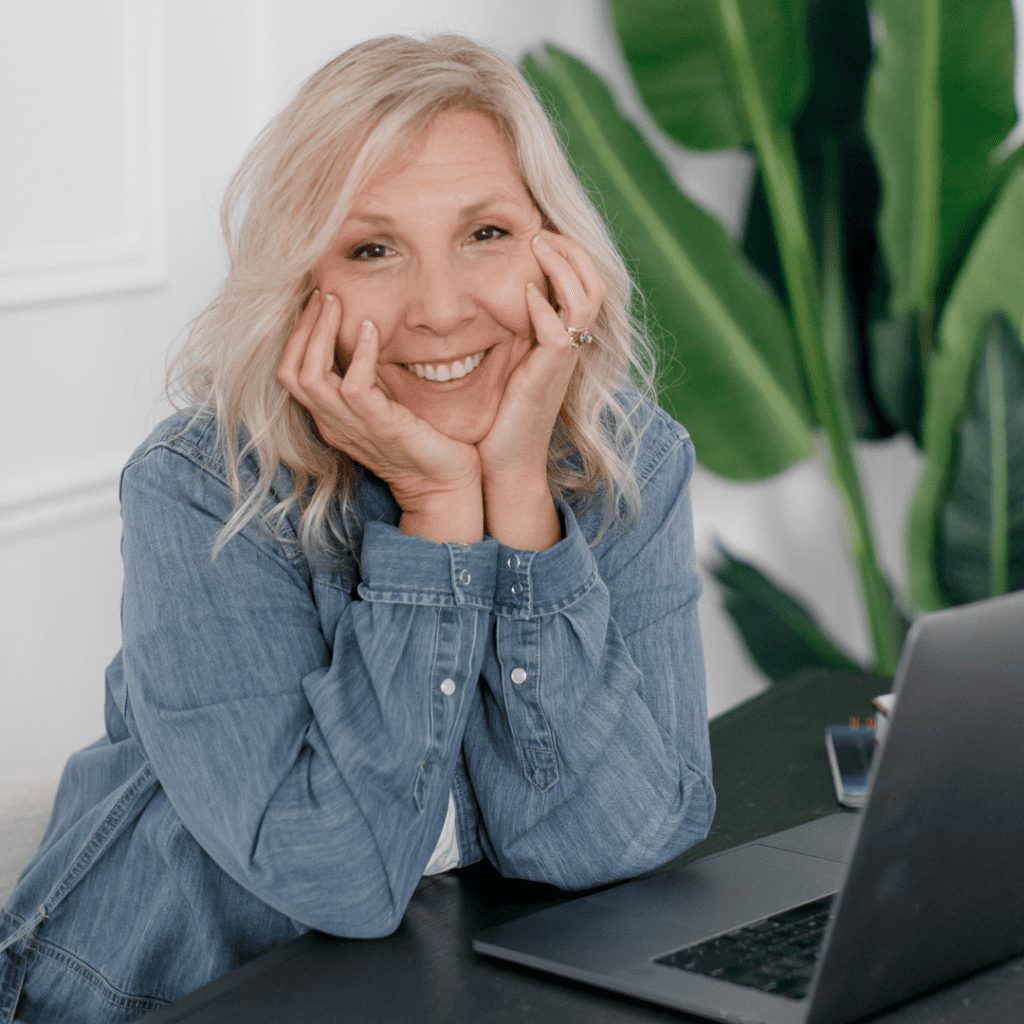
In this episode I chat with Tanya Stricek, the Mindful Nutritionist, a midlife health expert, and the host of The Fullness Podcast.
We talk about the challenges women face being in that midlife phase while living in a size-obsessed world and the benefits of incorporating a mindful eating and weight inclusive approach to aging and health.
Let’s talk about how we can shift the focus away from size and weight and onto habits and behavior and all the ways we can bring joy into our daily lives.
Connect with Tanya
Tanya’s webinar: New to the Non-diet approach?
Tanya’s website: https://www.tanyastricek.com
Episode Transcript
Welcome, everyone. I am here with Tanya Stricek and she is a podcast host. She is a health coach and she is an expert on all things menopause and I am excited to share all of her wonderful wisdom with you today.
Welcome Tanya. You are a mindful nutritionist and you are the host of the Fullness podcast. So let’s dig into this.
Tell me about your podcast.
My podcast. What I really wanted to create was something that women could come to and hear story, hear health information.
We could talk about non-diet stuff, grief, all the things that really come into mid-life because I think sometimes we miss things when we talk about perimenopause, menopause, and even post-menopause. And it’s things like losing careers, losing husbands, losing partners, same-sex relationship transitions, all the things that really make up a longer life. And how do we bring this into leading a full life and hence the podcast was born? That’s where the name came from.
Yes. And truly was inspired by my mother who had a lot of mental health issues, had a tough time growing up with her. She was dying when I was turning 50 and I was still really down the rabbit hole of over-exercising and hating my body.
And as I watched all these people in the nursing home where she was at, dying. And one of the workers there commented to me, she said, you know, do you realize how these people have had full lives? That guy was a professor. She was an opera singer.
And I thought, this is where we go. We don’t get out of here alive. Why am I worrying about all this stuff? How can I live a full life right now? I love that.
And I love that you’re bringing fullness, kind of full circle, no pun intended, with being a non-diet nutritionist, right? So fullness can mean fullness of life. Fullness means finally being able to experience fullness if you’ve been in a cycle of restricting yourself throughout your life with food or other things that you maybe feel like you didn’t deserve.
Do you get into that at all? I mean, there’s some practical things on there where I talk about mindful eating, which actually was a game changer for me.
I know many people are into intuitive eating and there’s some similarities there, but really just the concept of what’s happening right now and what do I need started to speak to me. And so, yes, I do get into the broader thoughts about fullness of life, but also fullness as a metaphor for maybe this age.
You know, we have spent women at 50s, 60s, 40s, Laurie, you can probably relate to spending so much time denying yourself, whether it’s food, the business you want, the desires you want in life, we deny.
And so it’s time to see that and let that go. We talk about a lot of the same things from different angles. And I think that’s really fascinating.
You touched on mindful eating and how that was a game changer. Can you talk about that a little bit? Absolutely. I was introduced to mindful eating when a colleague who was taking a mindfulness certificate here in Toronto set up an event and it was a mindful wine tasting event.
And I didn’t have an easy time wrapping my head around mindfulness because my concept was like mindfulness is meditation and I need to sit on a cushion and I got to do that for an hour and who has time for that? You know, to roll it back when my daughter was two, I lost my partner. He committed suicide. And it was suggested that I started meditating to take care of myself in that day.
And I was like, are you kidding me? Like I’m a single mom and I have a full time career. So when I went to this event, I kind of went in thinking, what is this going to be? Am I going to be meditating with glasses of wine? Like the wine part I can handle. And we sat down and slowly focused on what was in front of us.
Slowly sipped the wine. And after three sips, I turned to my friend and I said, I feel like I’ve just had an entire experience here. And she said exactly.
And that opened up my mind. Like, what does this have to apply to food? Like, what does this have to do with food? And I found a course. And when I took it, I will still say, you know, maybe this mindful eating is going to help me still get a grip on my eating and stop eating so much.
And it really just showed me that our food isn’t the problem. We think that we as women who are gaining weight or have problems with our bodies, we think it’s the food. And it totally isn’t.
It’s about emotions and maybe a bit of self-regulation, but also about patterns and habits that we just don’t see unless we slow down, take a bird’s eye view of ourselves and watch how we operate around food and then actually decide, maybe I’m OK to where I am right now. Does that make sense?
I love that it came to a realization of how mindfulness could be applied to other things and just something that we do every day, something just how we are every day, how we interact with our food, our emotions. So do you have a regular like, what’s your mindfulness practice right now? What does that look like? I’m a fully transparent, authentic person, so I would love to tell you that I get up every day, light a candle and go to my yoga mat for 20 minutes of meditation.
My mindfulness practice does include I wake up every day and I’m grateful for the day I have and I go to bed every night and I’m grateful for what transpired.
I make sure I’m grateful for my family because after the last two years, we’ve all been through a lot of stuff and I have really honed in on what’s working right now and what’s good right now in the day. Yes, there are times when my mindfulness practice does include meditation and there’s days when it doesn’t.
But I will say that I have a lot of conscious eating where in the day I’m asking myself, am I actually hungry or what else am I feeling? And when I know that I’m stressed and overwhelmed because my pattern is to overwork and I have lots of things I want to do. And when two o’clock in the afternoon hits and my mind is like, well, I have so much to do. I want to go to the cupboard.
So my mindfulness practice is OK, this is what’s happening. Like I’m overboiled. I’m overcooking.
What can I do right now? That is going to care for myself. Is it have a snack? Is it have a nap? Is it go cry in the bathroom? And that’s what it really means to me. Perfect.
So I hear as one, even though you are a credentialed, qualified professional and you help people, you are also a human being. Many days. You touched on something critical here is that as coaches and people in the wellness industry, one, we have this perception that people out there think we are practicing these pristine activities where we sit, you know, like you said, wake up, light a candle, sit on a yoga mat for 20 minutes.
And part of that is because of what we do. But you just explained how mindfulness is something you practice. You have gratitude.
You’re thankful for your day, your family, your health, and you’re aware of how you’re interacting with your food and your emotions and what is going to serve you when you are feeling when you recognize the emotions that you’re having or the feelings that you’re having throughout the day.
And when you’re overworked at two o’clock and you’re like, OK, what can I what what am I experiencing? What does it mean? And how can I care for myself in this moment? And it’s not always the same thing, right? You have choices. Maybe what works today is not going to work tomorrow or what was perfect days ago was a nap.
And now today you really just want to go for a walk or you want to do some yoga or whatever it is that serves you at that moment. Yeah, you nailed it. Oh, this is how I work with people because people always have changing lives.
That is life. And when we start to accept that changes happen, it’s how we’re going to roll with it. How are we going to deal with them in that moment? And I think that is very freeing and healthy.
It brings a lot to the health picture rather than the rigidity of what’s my breakfast going to be for the next five days on this plan? What am I going to do when I have to go out for dinner when I’m trying to eat chicken and broccoli? It brings flexibility, but also a lot more calm. And it opens up the space to enjoy your life, too. Something that I hear a lot from my friends and other women that I know is that once they get into their 40s, they experience a freedom.
They have a realization that the rigidity and the thing, all their shoulds that they’ve been kind of carrying around for their 20s and 30s that they’ve internalized from, you know, media or family or just society, they get to their 40s and they’re like, oh, I don’t I don’t actually care that much what people think. I am actually going to do what I want to do. I’m I have freedom to do the things that I want to do, approach my life, my career, my hobbies, take up new ones.
And it’s like that freedom of getting into I feel like starting that that midlife awakening. Does that make sense? That totally makes sense. I do meet women who are stuck.
So one of the things I do is hang out in a very large perimenopause hub as a Facebook group expert. And I hear a lot of language around defeat and I have nowhere to go and I’m washed up and there’s nothing left. And I’m so tired.
And these are the women that I would love to help transition into rebirthing, rejigging your entire self, being open to explore the dreams that maybe you had when we were 20. So you are an expert in this in this particular community and you’re helping women who are feeling stuck and defeated, defeated, oh, oh, defeated and invisible. And so those are the women that you kind of say, look, let’s let’s sit down and kind of figure out what the next chapter looks like for you.
What do you want it to look like? Tell me what that looks like when you when you walk with somebody through that that process of mapping out their next chapter. I always ask people to go through a values exercise. And I’m not sure if you have done this before.
You can’t pick your next step in life until you know what you value. And if you don’t know what you value, I highly suggest you figure that out. If you don’t sit there and pick the things in life that you value, maybe you value being in community because you’re very lonely at 50 because your friends don’t get you.
Maybe you value freedom. But what does that look like? Maybe you value family, but you’re not really nurturing your own family. Maybe it could be anything belonging, et cetera.
That’s what you need to know to go forward because everything you do needs to align with what you value and what you want at this point in your life. And that’s going to change. So do you think when you are meeting women who say that they feel stuck and defeated, they’re out of alignment with their values? Is that is that a symptom of that? That could be a symptom of that.
Yes, women who are stuck and defeated could also feel that way because they’re stressing the physical self, which, of course, if you’re fatigued, if your hormones are out of whack and you’re not happy in your body, you’re not going to want to go out into the world. So how can you accept just because you accept doesn’t mean it has to be. But how can you accept where you are, too? You know, how can we accept that? How can I accept that I’m 56? My body isn’t what it was when it was 25, but it’s still relatively healthy.
And if I don’t feel relatively healthy, what can I do today that’s small to shift that? How can I feel like I’m moving forward? Because when you’re stuck and defeated and you don’t know where to turn and you’re hinging things on, say, your menopausal belly or your weight gain, it’s just perpetuating a cycle. You’re just staying in the same hole. And so it’s finding a way like just one little leg up for somebody and it may be with their values to latch onto.
You know, if you value freedom, then let’s help you get free. Let’s help you let go of the body right now. Where can we just be neutral about that and move to the next step of getting you feeling like energy? You just touched on something important, body neutrality.
Can you define that for us? Body neutrality is if you are sitting listening to this podcast and you’ve hated your body, you’ve been shamed for your body for a lot of your life, going to the mirror and loving yourself, it just doesn’t work. So with body neutrality, it’s kind of removing the emotion about your body. You know, my thighs are my thighs.
It’s not that they’re good or bad. They’re there. My thighs carried me to work today.
And I don’t need to look into a mirror and love my thighs. I can have thighs because when we remove that emotion, it can help you create space to actually work on health behavior that can serve you. Body image stuff isn’t a quick fix.
If you’ve had a lifetime of negative messaging about how you look, going from that place to I’m looking in the mirror and I love everything I see, that’s a huge leap. That’s an impossible ask. And I think it’s overwhelming for people to expect people to be able to make that leap in a short amount of time.
So that kind of midpoint where you go from looking in the mirror, ugh, this, ugh, that. I don’t like how this looks. I don’t like how this rubs together.
I don’t like the lumps here, whatever. Going from that place to saying, you know what? My body just is. I’m responsible for taking care of it.
I want it to last. I want it to carry me through the next 30, 40 years. What can I do right now to take care of it? How can I respect the body that I’m in right now and show it care to move to a place where I’m actually excited about what I see? I’m not there yet.
What small step can I just take to recognize where I am in my body, appreciate what it’s done, and then just kind of baby steps to feeling better about it, feeling positive about it. These are all just thoughts too. And so when you practice the neutral part of this and removing emotion, what you’re doing is taking thought.
It’s almost like you’re pulling the thought out of your brain and looking at it, because it is just a thought. The evidence that something is wrong with you might actually come from outside voices that have been internalized. And it’s just a thought.
To recognize the thoughts that you have about your body and hear mindfulness can bring you back to the present. Because when you’re thinking about your body with a negative thought, it’s extending out, isn’t it? Oh my gosh, look at my thighs. I better not eat this.
I should go to the gym. I should be, I should, I should. What’s happening right now? What do you need right now? Maybe what you need to do is sit with the feeling that’s driving you to think the thought.
And that’s one of the roots of the behavior around food too, it’s the thought. This is not something that you’re gonna listen to a podcast and go, oh, here are the steps I need to follow to solve my problem. This is a lifelong problem that I’ve had and a lifetime of behaviors that I’ve developed.
And I have my thought processes so grooved in that I can listen to something. I can listen to a free resource like a podcast and hear the secret steps to solve my problem. Please recognize that if you are in a place where this has been very traumatic or painful for you, you may need a licensed therapist or somebody who is qualified to help with this process.
I know that there are certified intuitive eating counselors. And a lot of times they work hand in hand with licensed therapists. So if that’s something that you need to address, please like look into that as a resource.
And I will definitely put some links in the show notes if that is some resource that you need. Let’s get back to our midlife awesomeness and turning that second chapter into reconnecting with where we thought we would be at this point. What does it look like? You said you start with a values exercise, identifying what’s important to the clients to achieve where they wanna be in this next phase.
What comes after that? Starting to look at what they’re doing and how it’s aligning with their values. So if you have the value of vitality but you don’t feel vital, let’s look at what’s happening in your life that is creating that. So is it that you’re overdoing it for other people? Is it that you don’t sleep enough? I mean, some of these can be very simple things.
Is it that your mind is telling you that you don’t look good enough to go out and get on your bike? What is it that is keeping you misaligned from feeling vital if that is what you value? That would be my next step. So actions aligning with identified values. Perfect.
And then from there mapping out what it looks like to align. How do we shift our behaviors or thoughts around what we’re doing to align with what’s important to us? Yes, and it’s very much a client driven process. When you think about it, I can’t choose what’s gonna make you feel vital, right? But I can sit there with you and be in it and in your space and help you find the things that make you feel vital because they’re going to be different than what makes me feel vital.
I think growth mindset is very critical when it comes to the stage of life. And when I think of these ladies who say that they are defeated, I do start to question what is your mindset like? Do you actually believe that you can get out of your funk? Let’s talk about like kind of that, that the phase of life that we’re getting into in midlife, which is perimenopause, menopause, postmenopause. What does staying healthy look like during these phases and how is it different than in our 20s and 30s? When I think of health in midlife, I think stress resilience and health is gonna mean something different to everybody.
I think we’ve already established that, you know, this is a unique and personal thing, but what seems to be a common denominator as we get a little older is stress. We’re caring for children who are still at home, that’s me, parents, we’re in the sandwich generation, careers may be switching. We have these thoughts about our bodies and a lot of stress comes in perimenopause and menopause and there are theories about what stress does to us hormonally.
We know that we have a stress response and we know that when we are stressed, our brain is telling us that we need to mobilize our blood sugar and to raise our heart rate and to breathe a little shower and maybe we won’t have an appetite and our digestion is gonna go off. But that also can cause brain fog and cause all kinds of other little hormonal shifts in the body that long-term are not always good. So we can do all of these things that we may read about, like eat more protein, hydrate, but at the end of the day, if your life is constantly putting you in low grade stress, that’s important.
We need to unplug a little bit in this phase because we are dealing with brain fog and very real blood sugar issues that are sometimes hard to manage when we’re talking about going through the aging process. So one, I wanna apologize because I used the term staying healthy, which is so nebulous and can mean so many different things to different people. So I would say your definition, the definition of healthy is gonna be extremely personal and define it however you need to as you’re listening.
I also think that we feel like we can control everything when it comes to our health, when we very well know there are other determinants that play into our health. Recognizing that can also alleviate some of that stress. You’re saying we feel like we have this control over the conditions that we do or don’t have as we age.
We don’t have a lot of control over certain things. Along with body size, you know, that’s something like we believe we can completely control the way our body looks. You may experience things that are outside your control and how do you manage that? There might be some wellness professionals that would disagree with me, but you can’t deny that we all have genetic history and that we have the social determinants of health that how much access to super foods if you wanna buy them or fresh food if you’re able to get that or even how much money you earn doesn’t play into your health.
And that’s creating a little bit of shame and onus on the person, on the individual when it comes to their body. So there’s many women, and I’m sure you’ve met them at 56 like me, who might say, if only I just did this, I wouldn’t be like that. What are your top three tips for women in this phase as they are figuring out how to be in their changing bodies and approach the next phases? I would say the top thing is that nothing comes from criticism.
So start to recognize your self-talk and how much you’re putting your own self down. That is a huge block to moving anywhere in your life, whether it’s your health, your relationships. When you think about it, if you’re constantly down on yourself, you’re not gonna move forward.
Change doesn’t come from criticism. So I would definitely have the listener examine where their judgmental thoughts come from. Judging is human.
There’s nothing wrong with that. It’s how we make decisions. But how much of that is happening in your life? And how much of that is keeping you, say, on the couch, not being social, not walking, not making yourself a dinner, you know? And then I would say stay in a place of acceptance right now.
Things are what they are. Doesn’t mean that they can’t change. Understand that accepting and caring for yourself where you are is also another key to change.
And that doesn’t mean you have to just do nothing. It means, okay, right now my blood sugar’s high. So I don’t need to go into that place of criticism that it’s years of ice cream or whatever you think it is.
My blood sugar’s high. That’s, it is what it is. It’s a thing.
What is my first next step? And maybe that can even be the third tip. We don’t need to know all the things. We just need to know the next thing.
The next thing that is aligned for you as far as your health, it is your blood sugar. What’s your next step? Hmm, should I get a glucose monitor? Should I talk to a dietician or nutritionist? Should I make sure my doctor’s appointments are set up? And it’s really keeping things simple. Two of them are mindset and one of them is an action.
Mindset, it’s such a big part of taking action and moving forward. A lot of people try to start with the action, right? They’re like, oh, I’m unhappy with wherever I am by first step, but like take a step back and just be, examine where your head’s at with whatever’s going on first and how do you feel about that? And then what’s the next step? So don’t just rush into fixing. That’s a great way to put it.
Because then we all go at this like, we’re conditioned to fix ourselves as women, right? We’re conditioned to fix everything, yeah. So, and I love that you said, don’t go down the spiral of looking in the rear view mirror and saying, oh gosh, this is 20 years of not doing this and eating ice cream and why was it, why didn’t I pay attention and why didn’t I do this and what’s wrong with me and ugh, all this negative self-talk, which doesn’t help. Like that doesn’t move you anywhere closer to your goal.
No, and don’t you think, because I don’t know about you, but I’ve been there, that kind of thinking could either drive me back to the ice cream or back to the fridge. Cause you get that whole like fuck it moment, right? Oh, totally a fuck it moment. Like you’re like, well, what’s the, if I’ve done it for 20 years, what’s one more day? And then you say that tomorrow too, because you’re still in the fun.
And tomorrow, that’s right. Because you haven’t like kind of stopped that thought process in its tracks and said, look at like, what’s our step forward? But right, going down that rabbit hole. I would love to leave your listeners, maybe just back to the beginning, if they are still in a restriction mode and they’re wondering how they can get out of that or just change things up a little bit, start to see if you can tune into your body cues.
Just even start with hunger. Do you know when you’re hungry? If you’re never hungry, can you actually see if you’re turning that hunger off with coffee, anxiety and too much collagen supplements or just denying yourself? I think understanding our body cues is one of the fundamentals that we don’t really think about. You don’t deny yourself to go pee.
Why would you deny yourself something to eat when you’re hungry? You’re not shutting off your pee signal. Why are we shutting off our hunger signal? That’s a really good point, honoring our biological needs, first step. Tanya, what I’m gonna do is put all of your links into the show notes so that our guests can connect with you.
I know you’re on Instagram, you’re on Facebook, you have a podcast, I’m definitely gonna be linking to that. So I have a webinar coming out that is all about getting in touch with your hunger. It talks about hunger and cravings and it has some very simple steps.
If you find you can’t get in touch with your body cues, you wanna know what the hunger scale is, you wanna be walked through it and you want a little self coaching, I have that, feel free to sign up. Perfect, I will put the link for that in the show notes as well and they can check out your webinar, they can connect with you on social, they can listen to your podcast and they can soak up all the Tanya goodness everywhere that you are. Tanya, this has been, I wanna say amazing, but that doesn’t even do it justice.
Thank you, thank you, thank you for spending time with us and talking about all things, midlife, menopause, fullness, non-diet mentality, this has been great. Thank you so much, this was fun. Thanks for listening and if you liked this episode, go ahead and leave us a review on iTunes or wherever you listen to podcasts and be sure to subscribe so you’ll be notified when the next episode is live.
Check out our show notes for this episode where you can find any of the links and resources that were mentioned during the show and connect with a health and wellness provider committed to helping you ditch diets and achieve results without restriction. Thanks for listening and we’ll catch you in the next episode.