Subscribe: Apple Podcasts | RSS
Taking the Scary Out of Strength Training With Kathryn Blaze
In this episode I’m chatting with certified Kettlebell expert, Kathryn Blaze. She shares how shifting her focus from Pilates, dance, and ballet to include weights and kettlebell strength training changed her life.
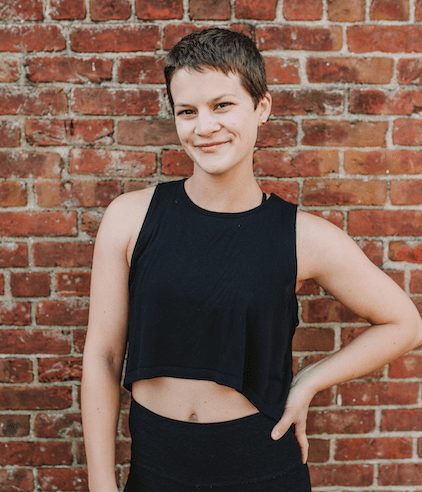
When an injury led to a prescription for strength training, her resistance (pun intended) to hit the weights was not unusual for most women. As a lifelong dancer and Pilates/dance fitness instructor, she was drawn to activities that took advantage of her natural flexibility… but It didn’t take long for Kathryn to see that getting stronger translated to so many other benefits – physically and mentally!
Now she’s a trainer who encourages functional strength training and helping her clients get strong for everyday activities, like carrying small children and Costco runs, she shares her best tips for dipping your toe into the world of strength training.
You can connect with Kathryn…
On her website: https://www.kathrynblaze.com
On the Instagram: https://www.instagram.com/kathryn.blaze/
Work With Kathryn
If you crave simplicity + efficiency in your fitness routine, movement snacks are a great tool to keep in your wellness toolkit. In less than 20 minutes you can walk away feeling energized and strong and ready to tackle the rest of your day.
Inside the Movement Snack Refresh, a 4-week program for building a sustainable movement practice, We’ll use bodyweight exercises to move out of a tech-neck, stuck-in-my-desk-chair position, and tap into building strength + stability.
https://www.kathrynblaze.com/movement-snack-refresh
About Kathryn
Kathryn Blaze is on a mission to help busy professional women make movement a part of their business plan.
She is a certified kettlebell specialist, NASM personal trainer, and cheerleader for realistic, sustainable fitness. After decades of dance + barre fitness she dipped her (pointed) toe into strength training and hasn’t looked back.
Her approach eschews conventional fitness extremes and focuses on a balanced middle ground. She believes in strength training for LIFE, and creating a movement plan that helps set you up for success in your business.
Taking the Scary Out of Strength Training With Kathryn Blaze Episode Transcript
Welcome, everyone. I am here with Katheryn Blaze, and she is a certified kettlebell specialist, personal trainer, and a cheerleader for realistic, sustainable fitness. After decades of dance and barn fitness, she dipped her pointed toe into strength training and hasn’t looked back since.
She believes in training for life and creating a movement plan that helps set you up for success. Welcome, Kathryn. I am so excited to have you here.
Thank you so much for having me. Let’s dig right in. I want to talk about what brought you to this point.
I like to get into like the origin story with my guests. So walk me through kind of your journey and how you got to be at this point where you are focused on kettlebells and strength training and really helping business owners specifically to be realistic and use movement as part of their plan. So if you had said to me maybe like five or six years ago, like you’re going to be really in love with kettlebells and strength training, I probably would have just laughed.
Like absolutely, that’s not going to happen because my background always was like I was a ballet dancer. So since the age of three, I was a ballet dancer. I did not consider myself an athlete.
I did not do any sports. I tried to get out of running the mile every year in gym class, like was not into it. Dance was my thing, like graceful, long and lean, flexible, all that stuff.
And then after college, I was having trouble finding classes that I could attend. Like I was working in a nine to five job. I couldn’t find a ballet class to go to.
So I started going to a local gym and doing group fitness, taking group fitness classes. I started taking like some dance cardio classes and like aerobics classes. And that was kind of my entry into group fitness.
An instructor said, oh, maybe you should get certified. And I said, oh, OK. So I got started teaching dance cardio, like in a gym setting.
And from there moved into bar. And so I was teaching all of these. I get like mind body studio, like long and lean formats for the past 12 years.
And five, six years ago, I started having like very constant chronic neck pain, like I could barely move my head for months. I tried a bunch of different chiropractors and physical therapists. And finally, I found one chiropractor who was really focused on functional movement.
And so within like the first five minutes of our session, she had like pinpointed all these issues that I needed to work on. And by the end, she goes, OK, so what you need to do is strength training. Like the prescription for you is strength training.
I was like, that’s absolutely silly. No, like I’m not doing that. Like I’m going to she’s like, no, you really if you want to try and improve all of these instabilities that are going on with like the neck pain, I was having some knee stuff and like core.
Even though, again, I was I was very active. So I think this is an important distinction for people. Like I was very active and I was very what people would consider very fit.
However, I was really lacking in a lot of areas of strength because I’m a little bit hypermobile. Like I’m a little bit like too like naturally flexible. And so I was missing the stability pieces.
So she said, you have start strength training. I did a few sessions with a trainer with kettlebells per her recommendation. And I just kind of like got really into it like I not intentionally.
I kind of wanted to not be into it, but two things, one, you were resistant. Tell me why. Why? I mean, I know I have a feeling I know why, but go ahead and tell me.
Yeah, I just I think it was it was never something that was on my radar and it really didn’t hold appeal for me. Like I again, I mentioned before, I have never considered myself an athlete like in a traditional sense, like I’m very active. I love movement.
I don’t love feeling like drain. So like I would force myself but I would be teaching all this like bar. I would go happily to like Pilates and yoga.
But I would force myself sometimes to go to like a HIIT class because I was like, oh, I should be doing more like cardio and something else. And I just was like, oh, gosh, like the all the jumping and sweating and burpees, like that feeling of constant like exhaustion after I just like wasn’t really into it. And I also like I was intimidated by them.
I didn’t know how to use them and what to do with them. So when I started working with this trainer, I something about with kettlebell specifically, because I still am not like dumbbells don’t like it could elate me in the same way that kettlebells do. But like something about like the really precise technique of kettlebells was really appealing to me, like something like the like dancer and me who like loves choreography and loves that like precision and how you can keep working to perfect and train these like basic movements.
I was like, oh, yeah, I’m into it. And then being able to see like, OK, it’s it was like a struggle to press this like 18 pound kettlebell overhead. But then you’re like, oh, wait, like I just did two reps.
Oh, I just did three reps. Oh, after a few months, I can press actually like a 26 pound kettlebell. So like being able to actually track and see that tangible progress.
All of it started to really like I was into it. So it’s a thrill, isn’t it? It’s very empowering. You feel like a total badass when you’re like, I can now look at me pushing you pushing this weight around, like, yeah, start something with me.
I dare you. Totally. And I think, oh, yes.
And I think that what you’re saying, like, like feeling like a badass again. Also, not only have I never felt like an athlete, I have also never felt like a badass, like that is just not a descriptor I would ever use for myself. And so I think that tweak in not only other people’s perceptions of me, but my own perception of myself, of like what I was capable of doing and that I was surprising myself that like, oh, yeah, I can do this. I can lift this. It’s heavy and that’s OK.
I can it really like rocked my mindset in the best way. So I’m still teaching bar and dance at this point at gyms across New York City and New Jersey. But as I’m teaching them, I’m like, I just wish I was doing kettlebell.
So I very quickly became obsessed with kettlebells. I decided I was going to get certified in kettlebells. So I completed my strong first kettlebell certification.
And then I was like, I like, I don’t know if I can keep teaching these other format because like my heart’s not in it. And what I really know is important is that all these women that are here in my classes, because it was like ninety nine point nine percent women in like the dance cardio dance cult bar. Like I know actually what they need is strength training because they complain about all these like aches and pains and things going on.
And I’m like, OK, but so the solution that I think I can offer you is the heavier weights. So I was trying to figure out a way to kind of move into like a kettlebell focus, which was proving challenging because I was already really like niched into this like bar world at all these gyms. And then the pandemic happens.
The pandemic shut everything down. All the gyms closed. And I missed those classes zero percent.
Like I was like, I know I’m fine. Don’t need to go back to ever doing those things. And what I really want to keep doing is kettlebell.
So that was for sure a silver lining of the pandemic. It was the forced stop that I needed. And so at that point, I was like, OK, I want to get this message out.
I want to take the scary out of strength training. And I’m going to start to try and get more women involved. I’m going to like try and take this like mystery and intimidation factor away from kettlebells.
And that’s when I start my business. So a couple of things like I love that you had your kind of your own resistance to weights, weight training, resistance training. And just because you didn’t see yourself as somebody who lifts weights and that, you know, even though it was absolutely what you needed, you were like, but well, you know, this is not where I’m comfortable.
It was it was a stretch for you. No pun intended. Well done.
Now you’re trying to recruit. So then you go back into your classes where you’re like, listen, fam, I got you know, I think I think we need to talk. I think we all need to, you know, try, you know, branch out because you had that experience.
So you’re like, look, I went through it. I’m on the other side. Let me show you how that how your life can improve.
Because women in general, you know, especially maybe 10, not me. I would say I got into weights probably. I don’t know, 25 years in my early 20s.
We’ll just say. All right. And, you know, for me, but I was always kind of like athletic and bulkier.
So it didn’t bother me. But I know a lot of women have that mindset. And they’ve they’ve been kind of fed this line of, you know, weights.
Weights will make you both lift, lift a 10 to 10, 10 pound reps of bicep curls. And you’re going to look like Arnold and women are like, oh, no, I don’t want that. And it’s like, yeah, that is not even remotely how it works.
But yes, you know, so there’s just been this built in resistance and these messages for women and strength training that, you know, this is not what you want. You want that you want the pink weights, the white. And you’ve said this, you said the long and lean, which is like, oh, yeah.
Like, let’s stop talking about long and lean, because that’s like, that’s not a thing. You’re never going to get longer than you are right now. Yeah, I think it’s I feel like I can really say all this because I was that person.
Like I was fully indoctrinated, like coming from ballet lands. That was very deeply rooted. Like I spent my days in front of a mirror staring at myself in a leotard and tights.
Genetically, I am a small boned slender person. Genetics like didn’t work at it. Like that’s how my body is.
And still like as a kid, there were for sure like ballet teachers that said like your thighs are too bulky, you’re getting too big. Like it didn’t rattle me as much then as it now. Like looking back on it, I was like, oh my gosh, right in the world.
So when I moved into group fitness, I moved into like a pathway that was like a really easy transition for me, which was still in that, like, again, long and lean in quotation marks, like female focused, like from a conventional fitness perspective, female focused formats. So bar Pilates, yoga, dance. And there’s just such a like a split in this like strong divide.
It feels like between that and then weights, which like heavier weights, which becomes this kind of more bro. Masculine, muscly, like I’m going to grunt and I don’t know. I just I mean, I didn’t step foot on the floor like on the weight on the floor, the main floor of the gym, like that was not a place I went.
Like I went to the studio, like I went to the bar studio. I went to the yoga studio. I went to the main studio.
Talk dance. I did not step foot on the floor with all the weights and the machines and all that stuff until again, I started training with kettlebells and I had to like carve out a little space there because I was in fact still surrounded by a lot of like grunting bro energy. It’s a hard like veneer to crack and to kind of like break down that like assumption expectation that people have.
These women that were in my classes with me for years were watching me like saw me after I taught their bar class, then go to the floor and start training with kettlebells on my own. So they were seeing that I was transitioning into this strength world and they were like, oh, no, like I could never do that. I don’t have any upper body strength.
I am afraid of hurting myself. I don’t want anyone to see me out there. Like there’s all these like these fears and concerns about the weights.
And like so much of that is like a societal thing. And it’s fitness industry with like a capital F fitness. It’s really done people a disservice by creating this like strict binary of what is appropriate for women to do in terms of like this goal of long and lean and this goal of like aesthetics only.
And I’m like, your toddler weighs 35 pounds. You are carrying him around like all day. So why are you so hesitant to lift up a 15 pound weight? Because your toddler is more than double that.
And I think people just don’t see the comparison between like the real life applications, but that’s what we need to train for. So like that, like the training for real life. Whatever that looks like for you is like the goal for me.
The goal of strength training is just life. Like can I keep up with actual life and my very active seven year old? Like I need to just train to keep up with him. Let’s discuss.
I have a seven year old. Yeah. Oh my God.
And I started late, so I’m already tired. I was tired when he got here. And now it’s just like I knew I need to really.
I have always considered myself a very energetic, active person. Like I really consider myself that no, compared to the seven year old boy. I am like your spongebob.
It is mind blowing. I just was like, oh, I am not on this level. So, yeah, I mean, I really have to you got to like work at it.
You got to work to keep up and to like, I want to be able to be there to like run around on the playground with him and to like be the mom that is not afraid to do those things or afraid like that. I can pick him up and carry him when I need to like still at seven. Like when he fell off his bike a couple of weeks ago and or her scooter and I piggybacked him and the scooter home like blocks.
So like, this is just something that came up and I’m like, yeah, OK, let’s roll with it. Well, let me ask you, is he your only guy here? So yeah, we we become the default playmates. Oh, I am the playmate.
Right. Rainy day, whatever. We can’t go.
Guess what? Where we get roped into whatever adventure. So many games better be ready for like whatever he’s devising. Yeah, yeah, yeah.
You kind of already covered why, you know, a little bit about why strength training is so important for women and the messages that we’re receiving. One, where the fitness capital of fitness industry telling women stay small. Yeah, right.
Do do the things that that keep you small, make you small. But also, by the way, you’re also going to be caregivers for small children. And you’re going to have you know, you’re going to carry groceries and you’re going to have a life outside of this gym where you come like a few days a week and you do all this stuff to make you smaller.
So you should probably think about how you can carry groceries, carry your kids, not get injured, not, you know, have these aches and pains as you get older, because I’m getting to that point where I just wake up and things hurt. And I’m like, I didn’t even do anything. I slept and that now I’m injured like this.
Yeah, we are in life. So having that the, you know, like you said, those stabilizer muscles and the smaller muscles working together to prevent injury and keep things aligned, you know, posture as we get older and strength training for bone strength. Oh, my gosh, all of it.
Yeah. So many so many things and that mindset kind of like the way you see yourself. Yes.
It’s really important, I think, for a lot of women to start seeing themselves as their own shero hero hero. Yeah, shero. We’ll use shero and being able to do the things for themselves, do all the stuff.
Right. Yeah, just live, like live your life, live life. Right.
Yeah, without depending on other people to do things for you or, you know, avoiding injury and just feeling strong and mentally and physically. So tell me why kettlebells versus dumbbells or barbells or free weights. But kettle, talk to me specifically about kettlebells.
So I was introduced to kettlebells because that is what the like the trainer, that’s what they were using. And they’re using it because of all of these amazing benefits. But that’s why I am lucky that I kind of like that was my intro to strength training.
It was with kettlebells from the beginning. So kettlebells, they’re incredibly versatile and their ability to do all the things that you can do with like a dumbbell or barbell like squat and deadlifts and all that kind of stuff. But also you can do a lot of ballistic movements with the kettlebell, like snatches and swings.
And again, this is something that these are things that perhaps as a beginner you would not do for a while. So don’t let that intimidate you. But the possibilities are there.
And it’s also portable, like it’s small, relatively small and portable. And you like I’ve brought it on vacation before when I was like training for something particular, like I put it in the car with our luggage and you can you have like one or two of them and that can really progress you for years. Like you it’s not like you need a whole dumbbell set.
You don’t need like a giant barbell set up. And especially now, like again, so many of us are strength training and trying to work out and move at home and maybe having gone back to the gym. So if you want equipment and like to get like the most bang for your buck and have the versatility, kettlebells are for sure it also kettlebells are just more ergonomically comfortable to hold just because of the way there’s like a handle, there’s the big bell at the bottom.
And so the way you hold it, it enables it to be a little bit more comfortable. And because of the way it is designed, you have this offset center of gravity. Everything you do, the minute you pick that thing up, you are recruiting so many stabilizing muscles just to hold it because it’s offset.
It’s it’s not totally symmetrical, it’s not totally balanced. So it really mimics a lot of real life stuff. Like if you’re holding that by your side, that it feels like the same way you would be holding a heavy grocery bag or something like that.
Because they’re so versatile, there’s a lot of stuff you can do with it. Like if you have seen them on social media, people do all kinds of like flows, they do kettlebell juggling, like there’s all sorts of things you can do. However, if you’re starting with kettlebells like with anything, you’re going to start at the beginning and you’re going to learn the foundations.
And so it’s just a really great tool. Working out at home for all of us who, you know, when the pandemic hit and gyms closed and we were like, OK, how do we work out at home? Like we could go outside, we could go for a run, we could kind of do some body weight stuff, but that’s really only going to get you so far. If you are used to working out in a gym and you are like, oh, I really miss, you know, having my weights or having like kind of a well-rounded you know, fitness program that I can do at home.
So kettlebells convenient, you know, you can keep them in like the corner. Like you don’t need a full set up. You only need a couple, right? So you can they’re highly versatile, different different movements, different exercises, you can use the same one for all of them.
I love that because like we put in a whole we put in I’m not going to lie, we put in a whole gym. We didn’t really have to. We could have gotten a couple of things and been happy.
But we’re like, look, we knew we were never going back to the gym like ever. Like I’ve been wanting sales. Well, yeah, we knew we were never going back to the gym anyway.
So we’re like, let’s just take that money and invest and do all that stuff. But having just being able to say, look, at here’s if you don’t have the room in your house for an entire you know, set up, you can’t you can’t dedicate a whole room to fitness in your house. Yes.
Move to the south. They make really big houses here in their cheap. Just kidding.
No, just kidding. No one move here. I was a joke.
I would zero out of 10 tacos. Do not recommend like anyway. But it’s nice to be able to be have a small corner.
You can have like your your kettlebells, your mat. You know, if you have anything else, I have a wheel. I have like my stuff like that.
And just have that be really convenient and you can tuck it out of the way. So you mentioned that there are so foundational movements with kettlebells. And so how walk me through a little bit like how when you work with a client, if they’re just starting out with strength training or if they’ve come from a gym and they haven’t done any kind of kettlebells, what does it look like to start on a kettlebell program with kettlebells? But with any strength of it, really, it’s the focus is on like the basic movement pattern.
So squat, hinge, like a debit, push, pull, lunge and a carry like anti-rotation or like carries. And that is the foundation like that’s it. If someone’s coming to me and they’ve never touched a kettlebell before, then we’re going to start very slowly building those things.
So there’s always going to be body weight work involved as well because that’s going to help support these movement patterns that we’re training. But, you know, we’re going to start with some body weight squats and gradually learn how to pick up the kettlebell correctly, safely, and then squat holding the kettlebell like a goblet squat. So it’s right in front of your chest.
You’re holding it with two hands. You squat with it. Maybe we’ll do some carry.
So you like hinge backwards, you grab the kettlebell from the floor and pick it up like you were picking up a suitcase. So you hand back, you pick up your suitcase and then you go for a walk. Like that is a suitcase carry.
And it’s amazing like that. If you want like a core exercise that is really going to mimic real life stuff. Like this one’s amazing because this again, this is something we do every day.
And for some reason, I think we think about fitness just as like a really isolated part of our day. And we’re like, OK, yeah, I did my hour at the gym and now I’m done. But really, like if we can integrate a bit better, not only I think, well, does it help the mindset around fitness and maybe like the motivation to see like how everything ties in, but it also makes it like a more frequent and accessible part of the day where like if you’re sitting at your desk all day and you have your kettlebell like behind you, like I have like all my kettlebells literally like right here behind me, I could stand up, pick up the kettlebell, do five or ten squats and then put put it down, sit down, get back to work.
So it’s like this integration of like how it all fits together. And so if we’re starting with a new client and doing these suitcase carries, it’s like, OK, I can say like, look, this is exactly how you’re going to pick up your grocery bags at the store. And so not only am I seeing why I’m doing it, like why are you making me do this suitcase carry? I’m like, well, because you carry stuff all the time.
Like you carry your luggage, you carry your groceries. So you see why, which I think is for me, at least it’s really important. I want to understand, like, why am I doing this? Like what purpose is it serving in my life? So we’re going to see why.
And it’s again, it’s setting it’s a movement prep. It’s setting you up your strength training for carrying those grocery bags. Like maybe sometimes the grocery bags are really heavy and you’re worried that you’re going to like tweak your back, just getting them to the car.
But if you’ve been trained, if you’ve been doing suitcase carries, you have learned how to like hold your body correctly and how to pick it up safe. So again, it’s this integration that I just really would love more women, especially to see how it all ties in and how kind of scary thing for the gym that maybe I have to do once in a while.
But like, yeah, this is part of this is like a supplement that I’m going to commit to multiple times a week so that I can take care of my body like now and into the future, because it’s also like a longevity thing where if you’re not working your body under load, you’re not doing that strength training and building strength, then your muscles aren’t going to really be able to support you when you’re 70.
So this is like an insurance policy for future you. Yes, 100 percent. And not only that, but it’s never going to be easier.
And I’m using this in quotes to to start getting into something new than it is right now. Yeah, I think the longer you wait, yeah, the longer you wait to start something, the harder it’s going to be. Starting is the hardest part of fitness, 100 percent the hardest.
We had to remodel our kitchen. There was much upheaval for three months. I legitimately did not touch a kettlebell for three months because there was no where for me to do it.
Like there were workers in my house every day. There was nowhere to go. I didn’t touch the kettlebell for three months.
I didn’t feel so good after that. Like my body was not so happy when the workers were gone. It was so hard to start again and get.
And again, I am a fitness professional. I train people to do this. I like it is my job.
It’s my career. It’s my profession. I’m so passionate about it.
I love it. It was a struggle. I had a hard time getting back into that routine.
And if you can start to build that routine and commit to that program, then like the benefits are just like too many to count. We this episode is not long enough. We can’t we can’t even I can’t I can’t just I can’t I can not be here all day just to list the benefits of resistance training.
So but yes, so future you will be thankful and you’ll be glad you started, even if it was uncomfortable or hard and that you at least got into it and added it to whatever kind of fitness program you are already doing or not doing. Yeah, I think it’s also like it’s also just never too late to start. So like, yes, there’s no better time than now.
And like the earlier you start, the better. And it’s never too late to start. So don’t like sometimes I think I’ve had people, clients tell me like, oh, it’s like it’s too late for me.
The ship is sailed. But no, the ship is not sailed. There are people that start lifting heavier weights at 70 or 75 or like it.
There’s it’s never too late. Like you can always try something new. You can always make a change.
So start. All right. Let’s talk about starting.
Tell me about your program. There are a couple of ways to work with me. One to one personal training is the basic conventional approach.
We’re going to dive into your personal goals. This is all virtual. So I think this is actually really fun.
Also the virtual aspects. I’ve had a number of clients that have been hesitant and been like, like Zoom, we’re going to do kettlebells on Zoom. I don’t know.
But honestly, it is so amazing. I have clients roll in at in the early morning hours, their kids are still sleeping there in their pajamas. They’re in their kitchen with one kettlebell and a mat.
And we make we get it done. And then it’s like, you know, seven thirty a.m., they go on with their day. So I think that the ability to just you’ve eliminated your commute.
You’ve eliminated any like, again, pressure of having like people watching you or like other people in the gym watching you, you don’t have to get dressed. Like, don’t get all up for me. Like, wear your pajamas.
I love it. Do it. Do get dressed.
Don’t get dressed up. Do get dressed. I don’t know what kind of kettlebell program that is.
But no, thank you. That is not offered at this time.
See All Episodes of the Results Without Restriction Podcast
Subscribe: Apple Podcasts | RSS